| Decision | What the evidence supports | Planning use |
|---|---|---|
| Reading a whole human genome | About six billion building blocks, read in about a day for about $1000 | Use as a ballpark when scoping a genome-scale project, then confirm with a current quote |
| Judging the cost trend | A million-fold reduction in the cost of sequencing a human genome since the Human Genome Project | Do not carry older cost assumptions into a new budget |
| Sequencing a limited target | Sanger sequencing suits relatively long stretches of DNA at low volumes | Choose it when the question is about one region or a handful of molecules |
| Sequencing at scale | Next-generation methods target large numbers of short fragments or even entire chromosomes | Choose them for many targets or genome-wide questions |
| Working from a tiny sample | The amplification step makes testing possible from very small starting amounts | Consider sequencing for forensic samples or ancient bones |
Figures in the table come from the NHGRI overview of DNA sequencing and a Databricks explainer on DNA sequence methods.
What is DNA sequencing? According to NHGRI, it is reading the order of the four chemical bases in DNA, then comparing that order with a reference sequence to find differences.
Which method fits depends mainly on how many targets you have and how large they are. If you want to see how sequencing results sit inside wider study design, start with how do clinical trials work in the Biotech Research Methods hub.
Cost and speed: what changed for planning
NHGRI states that the human genome has about six billion building blocks. Researchers can now read their order in about a day for about $1000, a million-fold reduction in the cost of sequencing a human genome since the Human Genome Project. The NHGRI page was last updated on April 5, 2018, and gives no dollar baseline or dates for the earlier cost. Treat its figures as an order-of-magnitude guide, not a price quote.
The trend has a clear method behind it. Praxilabs notes that sequencing a genome with next-generation methods is cheaper than with Sanger sequencing. NHGRI adds that computers compare the sequence of a DNA sample to a reference sequence to find base differences.
- Ask for a current quote. The headline price is a benchmark from a dated page. A provider’s present price, turnaround and scope are what you should budget against.
- Match the method to the scale. Per-genome savings come from next-generation methods. They do not make every small job cheaper, as the next section explains.
- Check what a price includes. Reading the bases is only one part of the workflow. The comparison against a reference is done by computer, so confirm whether analysis is part of the quote.
Choosing between Sanger sequencing and next-generation sequencing
The practical difference is scale. Sanger sequencing works through a limited target. Next-generation sequencing (NGS) runs many reactions at once.
Where Sanger sequencing fits
Databricks describes Sanger sequencing as still used for relatively long stretches of DNA at low volumes. It is costly and laborious when many molecules must be read. Its chain-termination chemistry produces fragments of different lengths, and fluorescent chain-terminator nucleotides mark the end of each fragment so the sequence can be read off.
This suits a lab that needs one gene or one region read and has no need for genome-wide data. It is a poor fit once the list of targets grows long.
Where next-generation sequencing fits
NGS is highly parallel. Praxilabs says many sequencing reactions take place at the same time, at micro scale on a chip. Databricks adds that these methods can target large numbers of short DNA fragments or even entire chromosomes. It also characterises NGS by improved accuracy and speed, with reduced manpower and cost.
Illumina is the platform named in the supplied evidence. Praxilabs reports that samples prepared with Nextera kits are compatible with all Illumina sequencers. It also says sequencing-ready libraries can be generated in less than 90 minutes from 50 ng of DNA input. Those are kit-specific values, so read them as one library-prep option and not a general NGS requirement.
Choose NGS when the project covers many targets or a whole genome. Stay with Sanger when the target is small and the run volume is low.
Practical uses and sample limits
Praxilabs lists the main fields that apply DNA sequencing: biotechnology, forensic biology, virology and medical diagnosis. In cancer care it is used to help identify the type of cancer present, and that information guides treatment decisions. The method turns a biological sample into data that can be compared across many samples.
Sample size is a frequent concern. NHGRI explains that the amplification step makes DNA testing possible from very small starting amounts, such as forensic samples and ancient bones. So a small or degraded sample is not an automatic reason to rule sequencing out. Discuss feasibility with the lab before deciding.
Sequence data is often the start of a longer workflow. A reader following what a sequence ultimately produces can continue with What Is Protein Folding? A Clear Guide To How Proteins Get Their Shape In 2026 – Biolifetechnologies. A team moving from sequence data to cell-based work can weigh its model options in Spheroids vs Organoids: Which 3D Model Should You Use in 2026? A Practical Comparison – Biolifetechnologies.
How the sequencing workflow runs
NHGRI describes three major steps in determining a DNA sequence. Researchers purify and copy the DNA, read its sequence, and then use computers to compare it with a reference sequence. Differences between the sample and a reference, such as the human genome, show up as changes in the order of bases.
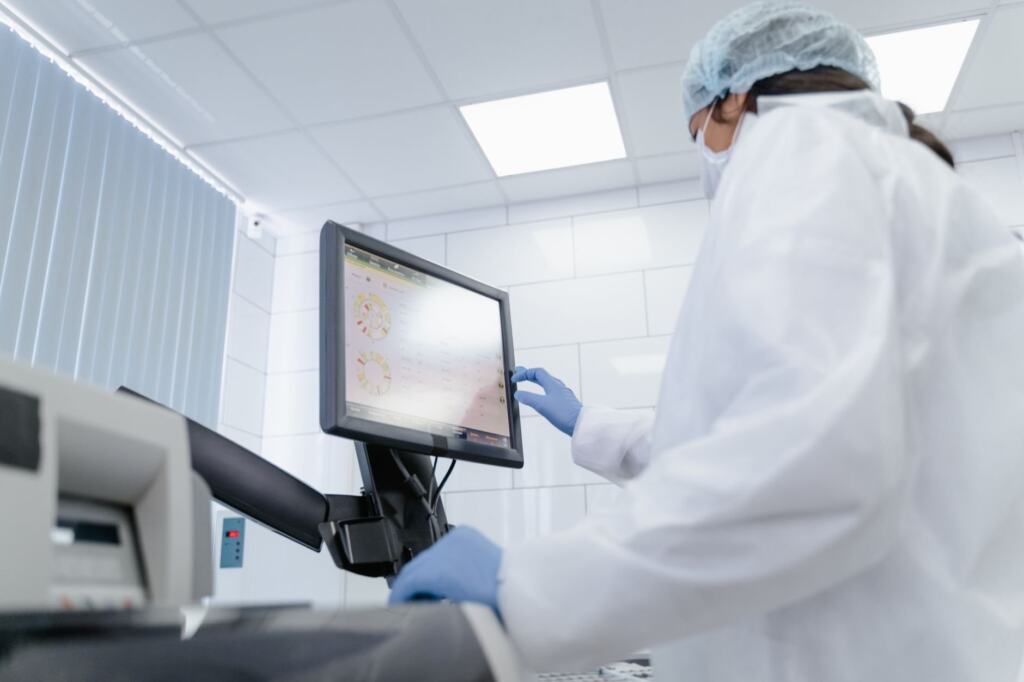
- Purify and copy. Amplification creates enough material to read, which is why very small samples can work.
- Read the sequence. Sanger chemistry reads one target at a time. NGS reads many fragments in parallel.
- Compare. Software lines the result up with a reference, so the quality of the analysis matters as much as the instrument.
The scope of a run is a separate choice. Whole genome sequencing covers all of an organism’s chromosomal DNA together with the DNA in mitochondria, and for plants the chloroplast DNA as well.
Frequently asked questions
How accurate is DNA sequencing?
Databricks describes NGS as having improved accuracy and speed. No single accuracy figure covers every method, so for a specific project ask the lab how it reports quality for the method it uses.
What is whole genome sequencing?
It is the reading of an organism’s complete genome: all nuclear chromosomal DNA plus mitochondrial DNA, and chloroplast DNA in plants.
Which bases pair together in DNA?
Adenine always pairs with thymine, and cytosine always pairs with guanine, according to Praxilabs. That pairing is why the order of bases on one strand defines the other.
When were the first sequencing methods developed?
Databricks places the first DNA sequencing methods in the middle 1970s, developed by Fred Sanger, and also credits Gilbert and Maxam.