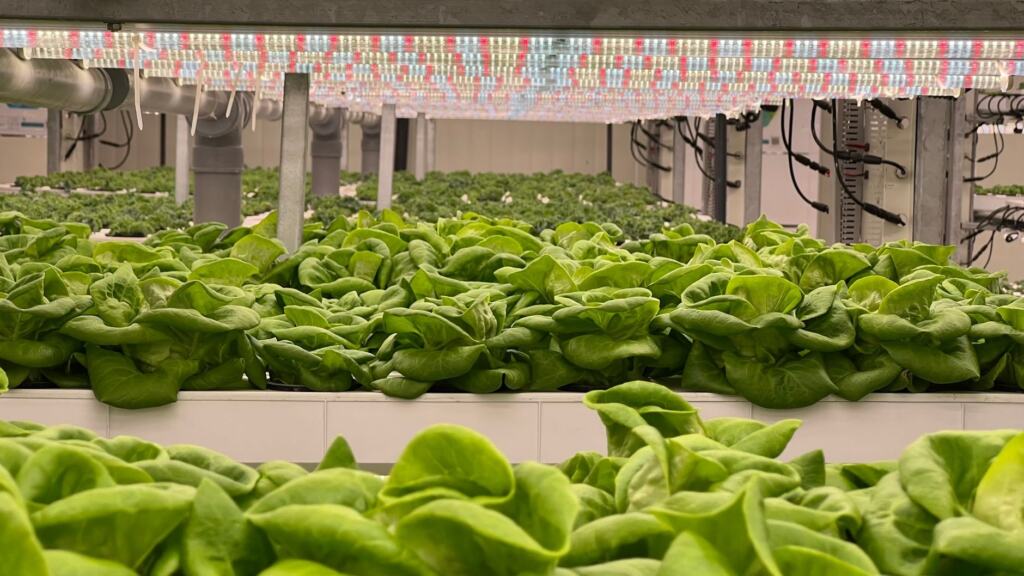
A city planner hears that vertical farming means towers of lettuce that solve food security. So what is vertical farming? It grows crops indoors in stacked layers under artificial systems, saving land but spending energy.
Vertical farming is one of several approaches covered in our guide on how does biotechnology help the environment. This article explains how it works, what it does well, where its costs sit and which crops suit it.
What vertical farming is
Vertical farming takes place inside, grows crops in stacked layers and uses artificial growing systems, according to USDA’s Agricultural Research Service. It belongs to controlled environment agriculture, which regulates temperature, light, humidity and gases for plant growth, as an industry overview of vertical farming systems explains. Because the climate is managed, growers can raise regional or seasonal crops indoors year-round, wherever a controlled environment can be set up.
The idea is simple. A vertical farm earns its value from the output it gets per unit of floor area, and it pays for that by replacing sun and weather with machinery. Most of the popular claims about the method, good and bad, follow from that single trade. The table below separates the claims that hold up from the ones that need a condition attached.
| Common assumption | What the evidence supports | Planning use |
|---|---|---|
| It is just hydroponics in a tall room | Stacked indoor layers under artificial systems; hydroponics, aeroponics and aquaponics are all options | Decide the growing system as a separate choice from the building and racks |
| Plants still get free sunlight | Indoor farms give up the Sun, so stacked systems often need artificial light, which can become costly | Treat lighting as a core operating cost from the first budget |
| It can grow everything | Lettuce and other leafy greens are the most popular crops; corn, rice, wheat and soybeans suit traditional farming better | Plan around leafy greens, not staples |
| Yields are always dramatically higher | For some crops, 10 to 20 times the yield per acre can be obtained compared with open-field farming | Read the figure as a crop-specific ceiling, not an average |
| Water savings are guaranteed | A supplier reports up to 90% less water than conventional farming | Use it as an upper-end, vendor-reported claim and measure your own system |
The yield, land and sunlight points come from USDA ARS, and the water figure comes from an equipment supplier’s overview.
Growing systems: hydroponics, aeroponics and aquaponics
Vertical farms usually replace soil with a water-based delivery system. The choice of system decides how nutrients reach the roots and how much else you have to manage.
Hydroponics
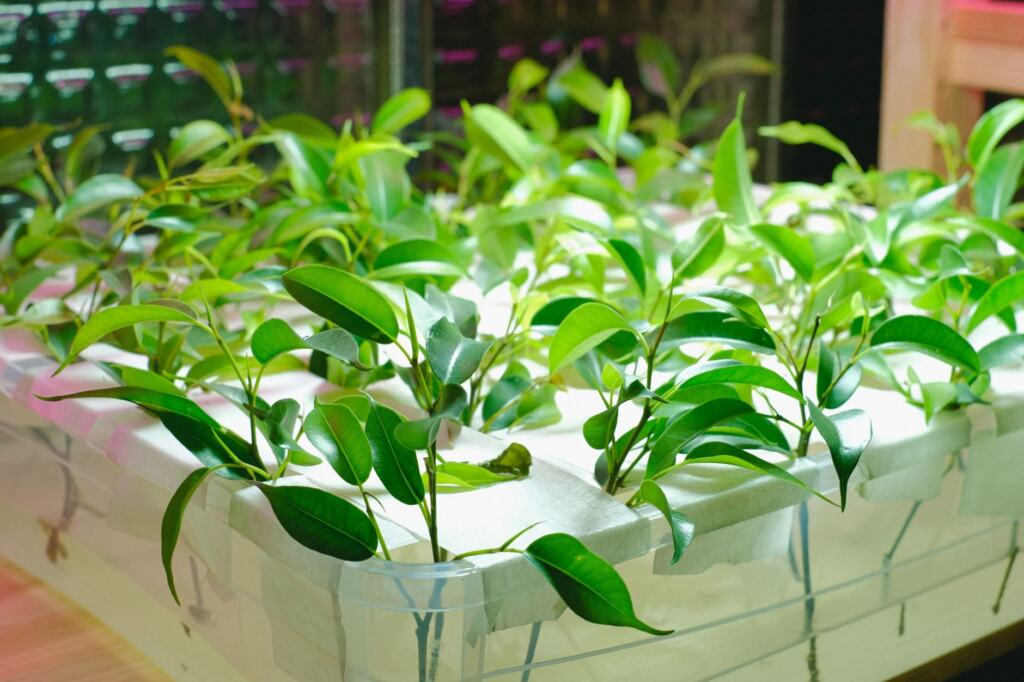
Hydroponics grows plants in a nutrient-rich solution rather than in soil. USDA ARS uses tomatoes grown hydroponically as its example. In container farms, plant roots are fed nutrient-rich water directly. It is the most direct way to see what stacked, soil-free production looks like.
Aeroponics
Aeroponics suspends plant roots in the air and mists them with nutrient solutions at intervals. Roots are bare rather than sitting in a tray of liquid, so the misting equipment becomes a critical component to maintain.
Aquaponics
Aquaponics integrates fish farming with plant cultivation, with fish waste serving as an organic nutrient source for the plants. It suits operators who want to run two living production systems together. Hydroponics and aeroponics keep the operation to plants alone.
Light and climate control
LED grow lights are central to the process, supplying the spectrum of light plants need for photosynthesis. According to the industry overview, they are energy-efficient and can be set to a chosen spectrum and intensity. That programmability lets a grower tune light to the crop instead of accepting whatever the weather delivers.
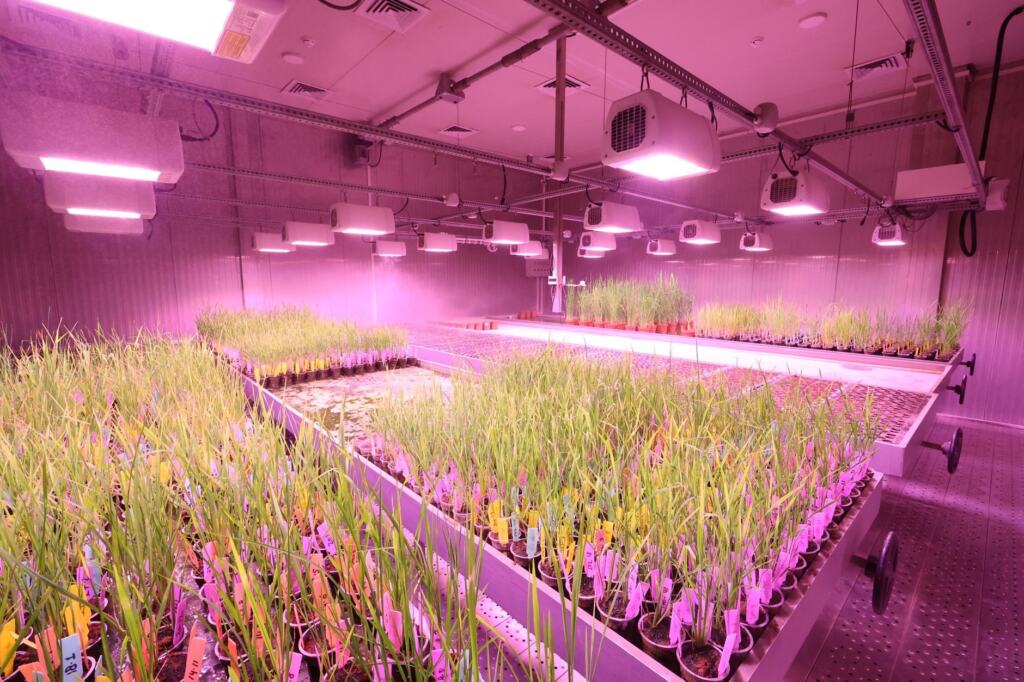
The cost side is just as clear. USDA ARS notes that going indoors means giving up the Sun, the most abundant and free source of energy on Earth. Growing plants in stacked systems often requires artificial light, which can become costly. Humidity control adds to the load: ARS describes it as depending on expensive, energy-intensive heating, ventilation and air conditioning (HVAC) systems.
For anyone assessing a proposal, lighting and HVAC are the two line items to examine first. They are what the farm pays for in exchange for stacking and year-round control.
Benefits that hold up
The advantages are real, but they vary by crop and by how the farm is run.
- Yield per acre: USDA ARS reports that for some crops, 10 to 20 times the yield can be obtained per acre compared with open-field crops. The phrase “for some crops” matters, and the crop table below shows which ones.
- Land: Vertical farming also uses much less land. This helps most where space is scarce and the crop is one that stacks well.
- Water: A supplier reports up to 90% less water than conventional farming. Treat this as a best-case claim and ask for measured results for your crop.
- Pesticides and pathogens: Crops can often be grown without pesticides and are much less likely to be contaminated by harmful pathogens such as E. coli, according to ARS.
Together these point to a method that fits fresh produce grown in limited space. They do not show that it beats field farming across the board, because the energy and cost trade-offs below still apply.
Crop suitability
Crop choice decides whether a vertical farm makes sense. USDA ARS says lettuce and other leafy greens are the most popular crops for vertical farming, while cereal and row crops are still better suited to traditional farming. ARS researchers are also investigating small fruits and fruiting vegetables.
| Crop group | Fit in vertical farming | Planning use |
|---|---|---|
| Lettuce and other leafy greens | Most popular crops for vertical farming | The sensible starting point for a first farm or pilot |
| Strawberries, tomato and pepper | Under investigation as small fruits and fruiting vegetables; tree fruits are also being studied | Treat as development projects, not proven business cases |
| Corn, rice, wheat and soybeans | Better suited to traditional farming | Keep in open-field production |
The crop groupings come from USDA ARS’s overview of vertical farming.
Is vertical farming sustainable and profitable?
It can be, depending on the crop, the energy supply and the buyers. The land and water advantages are genuine, but they are paid for with electricity for lights and climate systems. A farm running on a clean electricity supply has a different footprint from one that does not. Our explainer on Green Hydrogen Electrolysis: How Clean Hydrogen Is Made And Why It Matters In 2026 – Biolifetechnologies covers one clean-energy route, and algae biofuel is another bio-based option.
On profitability, the supported picture is about cost structure. High initial setup costs, covering building infrastructure, advanced technology and a controlled environment, are a barrier to entry, as the industry overview points out. Lighting and HVAC then recur as operating costs, as USDA ARS describes. Request measured energy use and cost per kilogram for your crop and location from suppliers, and verify them in a pilot rather than relying on brochure averages.
A vertical farm suits a project that has settled its crop, its power source and its buyers before building. If any of those three is open, wait and test on a small scale first.
Running a pilot
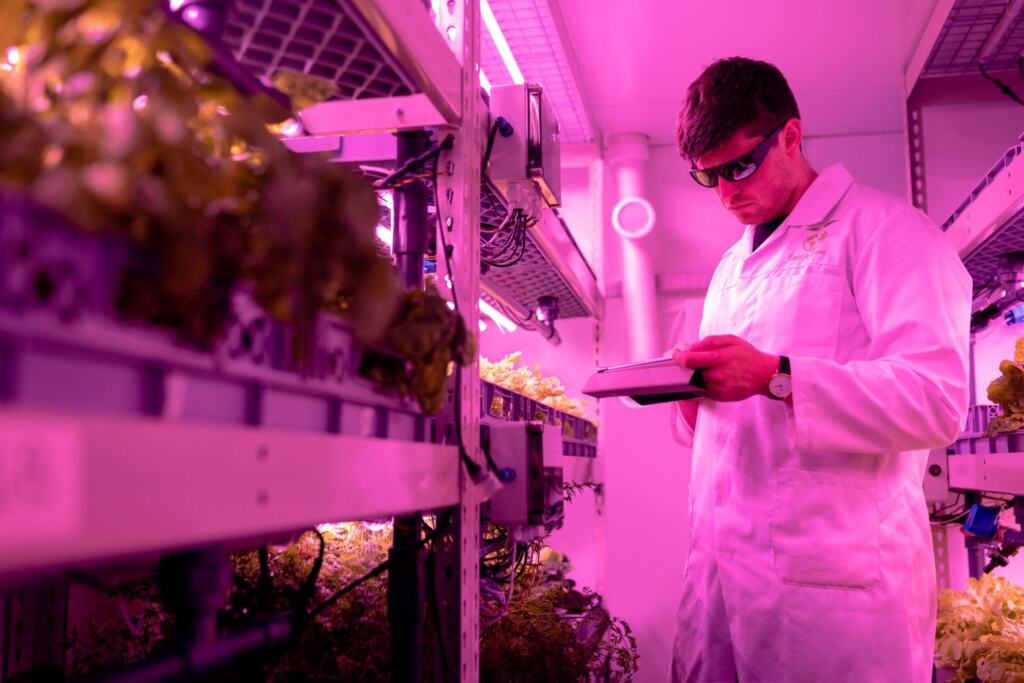
A small pilot is the cheapest way to replace assumptions with your own numbers. It is also where the operational side shows up, because monitoring and record-keeping run through every stage of growing.
- Pick a crop from the fit table. Leafy greens are the lowest-risk choice.
- Choose one growing system. Hydroponics, aeroponics and aquaponics each bring different equipment and skills.
- Meter electricity from day one. Separate lighting from HVAC so you can see which one drives cost.
- Line up buyers before scaling. Produce is only valuable if it is sold.
- Review results against the yield and water claims. Compare measured output with the ceilings quoted above.
Frequently asked questions
| Question | Answer |
|---|---|
| Is vertical farming the same as hydroponics? | No. Vertical farming describes stacked indoor production under artificial systems. Hydroponics is one growing method used within it, alongside aeroponics and aquaponics. |
| Does vertically farmed produce taste or nourish differently? | Typically not. USDA ARS says nutrition, taste and quality of produce grown this way are typically the same or similar, and it continues to study nutritive and sensory quality. |
| How long do seedlings stay in a nursery stage? | In one container-farm system, plants remain in the nursery station for 14-21 days before moving to vertical cultivation. Other systems may use different schedules. |
| Is the US government researching controlled environment agriculture? | Yes. USDA’s Agricultural Research Service established a Grand Challenge synergy project on controlled environment agriculture in 2018. |