| Effect | What is supported | Planning use |
|---|---|---|
| Imaging review | Deep learning is reported to be highly effective at analyzing X-rays, MRIs and CT scans. | Start with a radiology task where a clinician still reads the final image. |
| Early detection | AI is used to scan radiology images for early detection of cancers and heart disease. | Use it to flag cases for attention, not to close them. |
| Unstructured data | Deep learning can handle X-rays, MRIs, doctor notes and genetic information. | List the free-text and genomic tasks that rules cannot cover. |
| Clinical decision support | AI is widely used for clinical decision support. | Present outputs as prompts inside the clinician’s existing screen. |
| Adoption barrier | Integration with healthcare organizations and their records has been a greater barrier than accuracy. | Budget integration work alongside the model itself. |
| Error risk | Deep learning can make mistakes if it learns from bad data or is used without human oversight. | Require data review and a named human reviewer before go-live. |
Figures and use cases in this table draw on Paubox’s overview of deep learning in healthcare and ForeSee Medical’s review of artificial intelligence in healthcare.
AI and deep learning in healthcare pay off most in imaging review and clinical decision support, provided clinicians keep oversight and the tools fit the records and workflows they already use.
The wider question, how is biotechnology used in medicine, is answered at the Biotech in Healthcare hub, where this topic sits beside other clinical applications.
What changes for clinical teams
The practical effect of deep learning is felt where clinical data is unstructured. Paubox notes that deep learning can handle unstructured data such as X-rays, MRIs, doctor notes and genetic information. Departments that produce images and free-text records are therefore the natural candidates, and the choice of first project should follow the data a team already holds rather than the technology on offer.
Radiology and imaging review
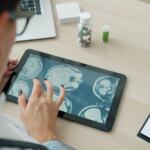
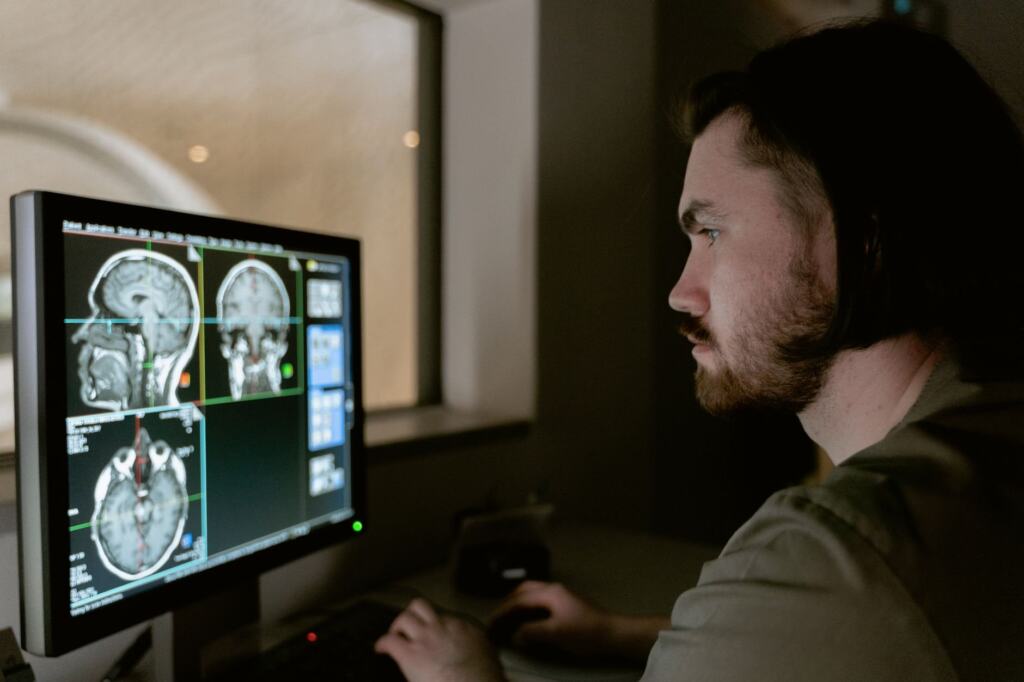
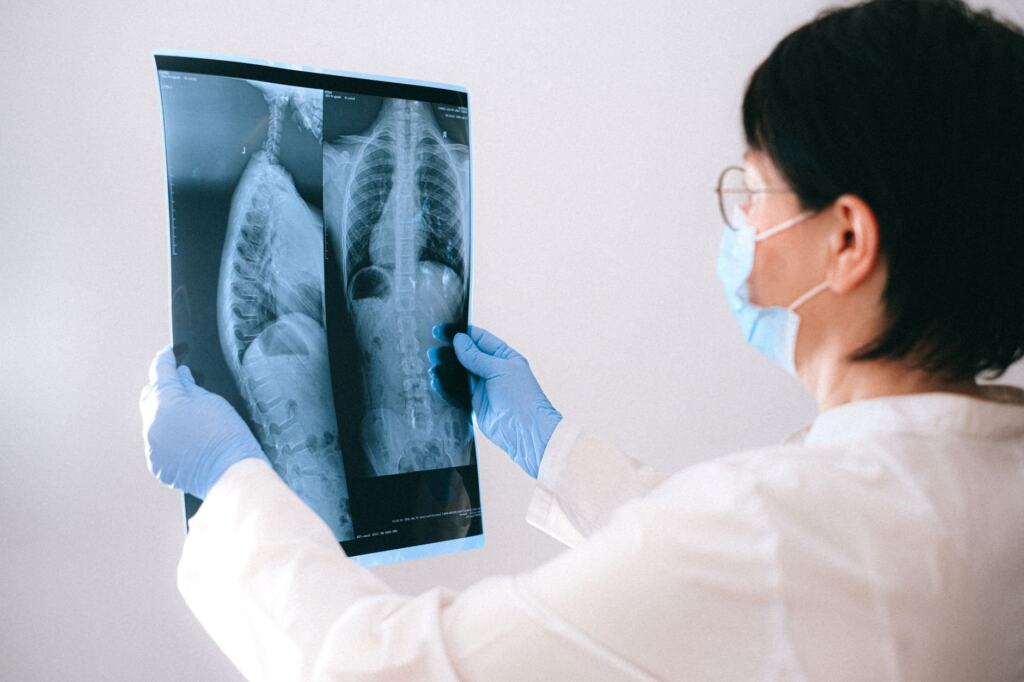
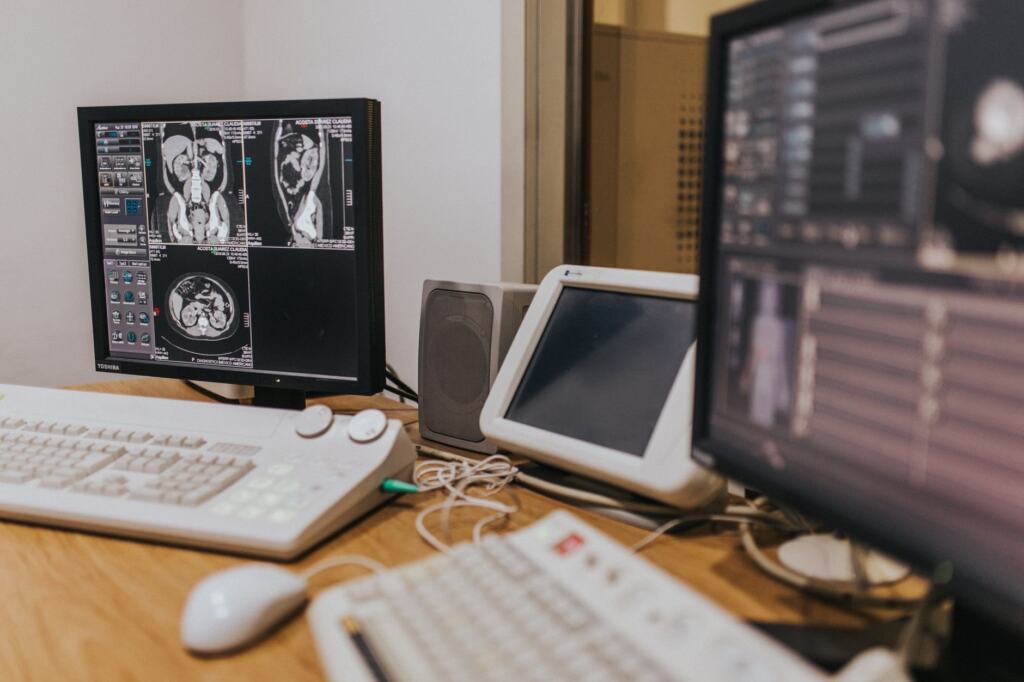
Radiology is the clearest use case. Paubox reports that deep learning algorithms have proven highly effective in analyzing medical images, including X-rays, MRIs and CT scans, and gives the example of analyzing X-rays to detect broken bones or tumors. ForeSee Medical adds that AI is used to scan radiology images for early detection of cancers and heart disease.
The task suits a first deployment because it is narrow: the software looks at an image and points to a finding, and a radiologist confirms or rejects it. That division of labor keeps accountability with the clinician and limits the damage if the model is wrong. A department that wants speed without giving up judgement should treat the output as a flag on the worklist rather than a finished report.
Clinical decision support
Clinical decision support is older than deep learning, and ForeSee Medical describes AI as widely used for it to this day. The newer promise, set out by American Public University’s overview of AI and machine learning in healthcare, is that AI could be programmed to create more precise diagnoses and more personalized treatment plans for patients.
The word “could” matters for planning. Decision support is best introduced as a second opinion that appears at the point of care and can be overridden, not as an instruction. Teams that adopt it this way can learn where clinicians agree and disagree with the tool before they rely on it for anything consequential.
Notes and genetic information
Free-text notes and genetic information are awkward for conventional software because they do not fit tidy fields. Deep learning is reported to cope with both. Genetic data often arrives alongside measurable signals from patients, and readers who want that grounding can start with the guide that answers what is a biomarker.
For a health system, this means the largest untapped gains may sit in text and genomic workflows that have so far resisted automation. It also means those projects carry the same need for clean data and review as imaging, so they should not be treated as easier simply because no scanner is involved.
How accurate AI imaging is, and where that stops
Deep learning is reported to be highly effective at medical image analysis, but the supporting findings are narrow. As Paubox puts it, the findings are specific to medical imaging diagnostics and do not apply to clinical diagnosis overall. A strong result on reading scans says little about whether the same approach can diagnose a patient who presents with symptoms, a history and several competing explanations.
This limit changes how a buyer should read a vendor’s accuracy claim. Ask what task was measured, on which images, and against what reference. A figure from one imaging task is evidence for that task only, and it should not be used to justify a wider rollout into diagnosis in general.
The same source lists the conditions under which deep learning goes wrong. Each translates into a decision:
- Bad data in, bad output out. Deep learning can make mistakes if it learns from bad data, so ask how the training images were collected and checked before you accept a performance claim.
- No unsupervised use. Mistakes are also likely if the model is used without human oversight. Name the person who reviews each flagged result and define what happens when they disagree with the model.
- Bias in the training set. If the data used to train the models includes biases, the predictions may also be biased. A hospital serving patients who differ from the training population should test the tool on its own cases first.
- Opaque reasoning. It can be difficult to understand how the model makes decisions. Prefer tools that offer ways to inspect their outputs; the DeepLearning.AI AI for Medicine specialization teaches methods to interpret diagnostic and prognostic models, which shows that interpretation is treated as a skill to be learned and applied.
None of these limits argues against using the technology. They argue for pilots that test the tool on local data, with a human reviewer in the loop, before anyone treats a headline accuracy number as a promise.
Fitting deep learning into hospital workflows
Accuracy is not the main thing that stops these tools reaching patients. ForeSee Medical reports that integration into healthcare organizations has been a greater barrier to widespread adoption than the technology’s performance. A model that performs well in a study but sits in a separate window, away from the electronic record and the imaging workstation, will be ignored by busy clinicians.
Deep learning also asks more of the underlying infrastructure. Aidoc notes that deep learning requires more data and computational power than conventional machine learning. A hospital should therefore settle where the computation will run and how images reach it before it signs a contract, because those decisions shape both cost and speed.
These choices help a health system sequence a first project:
- Choose a bounded task. Image review for a named finding is easier to oversee than open-ended diagnosis, and it matches the scope of the evidence described above.
- Plan for compute early. Because the approach needs more data and computing power, confirm capacity with the IT team before clinicians are asked to try the tool.
- Put output where the work happens. Results should appear in the viewer or record clinicians already open, with a clear way to accept, reject or escalate them.
- Give clinicians a voice. Record why people override the tool; those reasons show whether the model, the interface or the workflow needs fixing.
Weighing a promising technology against its practical and ethical limits is a familiar exercise across biotechnology, and the guide Stem Cell Research Explained: Weighing The Pros And Cons In 2026 – Biolifetechnologies applies the same balanced approach to a different field.
How deep learning differs from traditional AI
Deep learning is a form of machine learning built on neural networks, and Aidoc describes its mathematical models as designed to operate a lot like the human brain. The defining difference is feature extraction. In conventional machine learning, people decide which characteristics of the data matter. Deep learning extracts features automatically, which is why Aidoc says it requires more data and computational power.
Earlier clinical AI often took the form of rule-based expert systems. ForeSee Medical explains that as the number of rules grows, usually exceeding several thousand, the rules can begin to conflict with each other, which makes such systems hard to maintain. A learned model avoids writing every rule by hand, but it swaps that burden for a need for large volumes of good training data.
That trade-off guides the choice between approaches. Where a decision can be written down as a short set of clear rules, a rule-based tool needs none of the data and computing demands of deep learning. Where the input is an image, a note or a genetic record that resists tidy rules, deep learning is the approach built for it, and its outputs call for the extra scrutiny described earlier.
Frequently asked questions
How is deep learning used in healthcare?
Its best-supported use is reading medical images such as X-rays, MRIs and CT scans to help find problems like broken bones or tumors. It is also applied to doctor notes and genetic information, and it feeds clinical decision support.
Is deep learning the same as machine learning?
Not quite. Paubox describes deep learning as a more advanced form of machine learning that uses neural networks, systems modeled after the human brain, to process unstructured data.
Can AI analyze lab samples as well as scans?
American Public University’s overview says AI software could be used to analyze X-rays, MRIs, blood and urine samples more quickly. The wording is conditional, so treat it as a direction of development rather than a guaranteed result for any one tool.
Can AI personalize treatment?
The same overview says AI could be programmed to create more personalized treatment plans for patients. Any such plan should stay a suggestion for the treating clinician to accept or change.