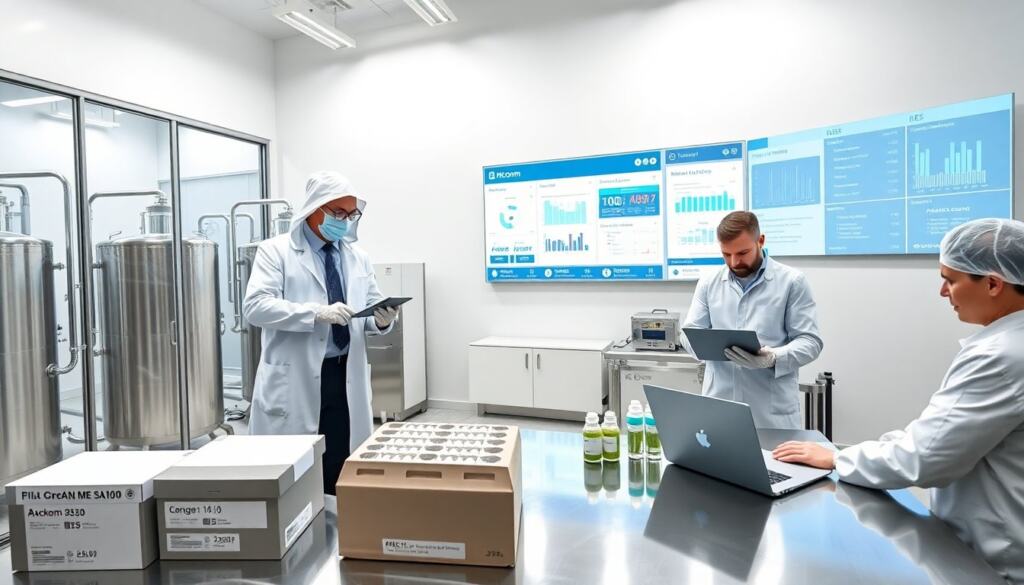
Cell and gene therapy manufacturing focuses on producing living medicines at consistent quality and scale. It requires precise steps, sterile facilities, and validated methods. Developers must control variability, manage supply chains, and meet strict rules. The field moves fast and affects patient access and cost. This article explains how cell and gene therapy manufacturing works, which technologies it uses, and what limits scale and supply.
Key Takeaways
- Cell and gene therapy manufacturing produces living medicines by modifying and expanding cells or viral vectors to maintain safety, potency, and identity at scale.
- Scaling manufacturing involves increasing batch size, automating processes, and ensuring strong regulatory compliance to produce therapies efficiently and affordably.
- Viral vector production and quality testing are major cost drivers; improving yields and adopting process intensification reduce costs and speed patient access.
- Supply chain challenges, including raw material scarcity and cold-chain requirements, necessitate strategic supplier qualification and inventory management.
- Contract development and manufacturing organizations (CDMOs) help scale production but require careful coordination and quality oversight.
- Investments in automation, workforce training, and standardized platforms are key to meeting regulatory demands and expanding patient access to gene therapies.
What Cell And Gene Therapy Manufacturing Is And Why It Matters
Cell and gene therapy manufacturing means making therapies that use cells or genetic material. Manufacturers handle patient cells, donor cells, or engineered viral vectors. They modify cells, expand them, and prepare final doses. The process aims to keep safety, potency, and identity intact. The industry moved from small lab runs to clinical and commercial production by 2026.
Patients get benefits when cell and gene therapy manufacturing succeeds. Therapies can cure genetic disorders, treat cancers, and replace damaged tissue. Health systems gain new treatment options. Companies that scale manufacturing lower costs and widen access. Regulators require documented methods, traceability, and release tests. Investors track manufacturing readiness when they value programs.
Manufacturers face unique risks. Living materials vary from batch to batch. Viral vectors carry safety concerns and require containment. Cold-chain needs add logistic strain. Each risk links to manufacturing choices. Many teams offload steps to specialized CDMOs to reduce risk and accelerate timelines. Outsourcing plays a big role in the current ecosystem.
Core Manufacturing Workflow And Key Technologies
The core workflow for cell and gene therapy manufacturing follows clear stages: material sourcing, genetic modification, cell expansion, purification, formulation, and release testing.
Material sourcing starts with donor or patient cells and plasmids or viral seed stocks. Teams test incoming material for identity and contaminants. Genetic modification uses viral vectors or nonviral methods. Many groups use adeno-associated virus (AAV) or lentivirus for gene delivery. Others use mRNA or transposon systems when they need non-integrating solutions.
Cell expansion uses bioreactors or closed systems. Manufacturers choose between adherent culture, suspension culture, or microcarrier platforms. Single-use bioreactors reduce cross-contamination and speed changeover. Automation in closed systems lowers manual error and improves reproducibility.
Purification and formulation remove impurities and concentrate the product. Chromatography and filtration remain common for vectors and cell products. Cryopreservation protocols stabilize final doses for transport. Cold-chain packaging and validated thaw procedures preserve viability.
Analytics and release testing confirm identity, potency, purity, and safety. PCR, flow cytometry, and next-generation sequencing appear frequently in test panels. Many teams add potency assays tied to the therapy mechanism.
Digital tools support the workflow. Manufacturing execution systems (MES) track batches and documentation. Electronic batch records and barcode tracking improve traceability. Process development uses design-of-experiment approaches to identify critical process parameters.
Plant design combines cleanrooms with segregated suites for vector work. Containment controls and HVAC design prevent cross-contamination. Many facilities adopt modular cleanrooms or single-use process trains to speed build-out and reduce upfront capital.
Each technology choice affects cost, time-to-clinic, and regulatory risk. Developers weigh those trade-offs based on program size and clinical need.
Scaling, Cost Drivers, Regulatory Hurdles, And Supply Chain Considerations
Scaling cell and gene therapy manufacturing requires changing from small, manual runs to larger, reproducible production. Companies scale by increasing batch size, running more parallel lines, or using automated closed systems. Each path changes capital needs and labor requirements.
Major cost drivers include vector production, facility overhead, labor, and quality testing. Viral vector yields often limit throughput and raise cost per dose. Improving vector yield reduces cost directly. High assay counts and long testing windows add release delays and inventory costs.
Regulators require strong control strategies and comparability data when manufacturers change process scale. Agencies expect data that show a scaled process makes product equivalent in safety and potency. Companies must plan bridging studies and early dialogue with regulators to reduce surprises.
Workforce skills shape scale success. Operators must learn aseptic technique, complex equipment, and quality documentation. Training and retention matter. Many firms invest in automation to reduce dependence on scarce manual skill.
Supply chain constraints include raw material scarcity, cold-chain capacity, and single-source reagents. Critical reagents like plasmids, enzymes, and specialized media can face long lead times. Manufacturers mitigate risk by qualifying multiple suppliers and keeping strategic stock.
CDMOs and contract manufacturers ease scaling pressures. They offer capacity, experience, and validated processes. But, reliance on external partners can create scheduling bottlenecks and require rigid quality agreements.
Cost reduction strategies focus on process intensification, higher vector yields, closed automated platforms, and standardized components. These changes lower cost per dose and improve predictability. Payers and health systems watch manufacturing cost closely because production cost affects pricing and access.
Policy and reimbursement shape investment. Clear regulatory pathways and predictable reimbursement encourage manufacturing scale-up. Uncertainty in reimbursement slows capacity expansion and raises risk for developers.
By 2026, the industry shows progress. Manufacturers increase yields, adopt automation, and diversify suppliers. Still, the field must keep improving manufacturing to reach more patients and make therapies affordable.