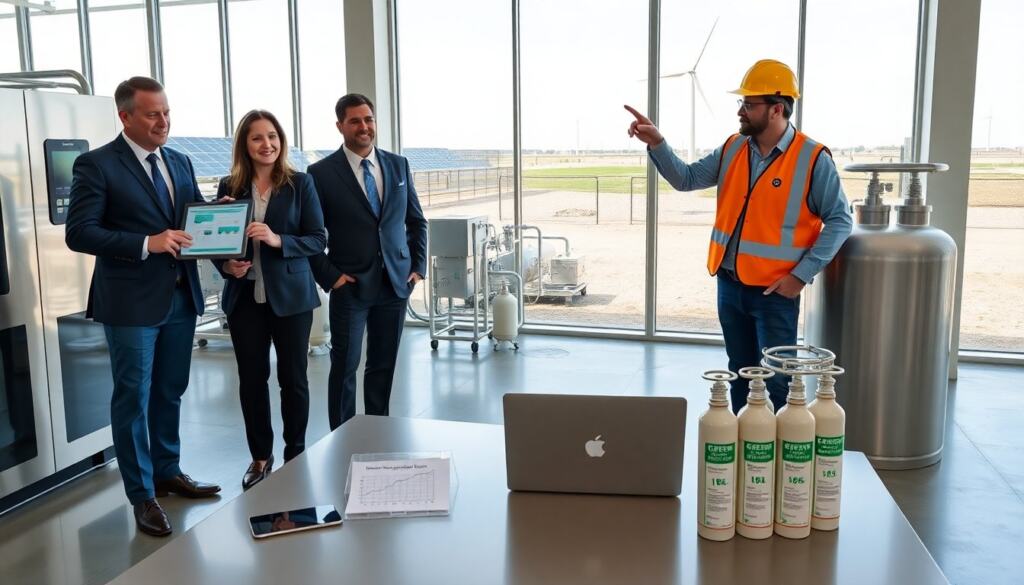
Green hydrogen energy refers to hydrogen made by splitting water with renewable electricity. The industry uses electrolysis to produce hydrogen without fossil fuels. The guide explains how green hydrogen energy is produced, where it adds value, and what stops large-scale adoption. The reader will get clear facts and practical options for 2026 deployment.
Key Takeaways
- Green hydrogen energy is produced by electrolysis powered by renewable electricity, enabling a low-carbon alternative to fossil fuels.
- It can reduce lifecycle emissions by over 70% compared to traditional hydrogen production when using truly low-carbon renewables.
- The primary applications of green hydrogen energy include power generation, industrial feedstocks, transport fuels, and high-temperature heating where electrification is insufficient.
- Technical challenges like efficiency, durability, and infrastructure upgrades exist but emerging solutions such as modular plants and hybrid systems are enabling scale-up.
- Various electrolyzer technologies—PEM, alkaline, and solid oxide—offer different benefits based on project needs and renewable electricity profiles.
- Declining costs, policy incentives, and growing market demand are accelerating the deployment and adoption of green hydrogen energy globally.
What Is Green Hydrogen And How It’s Produced
Green hydrogen energy means hydrogen produced by electrolysis powered by wind, solar, or other low-carbon electricity. Producers run electricity through an electrolyzer. The electrolyzer splits water into hydrogen and oxygen. Producers store the hydrogen for later use or feed it into pipelines. Producers measure emissions to confirm the product is green. Producers prefer sites with cheap renewable power and water access. They also consider grid connection and permitting. Green hydrogen energy avoids carbon from steam methane reforming when producers use clean electricity and certified supply chains.
Production configurations vary: some projects are co-located with dedicated solar or wind farms to lock in low-cost, low-carbon power; others use grid-connected electrolyzers that rely on certificates or temporal matching to claim low emissions. Operators must size electrolyzers to match renewable output and consider battery or thermal storage to increase capacity factor. Water purity and treatment are important because impurities degrade electrolyzer performance; many projects include desalination or filtration units when using non-potable sources. Finally, certification mechanisms and guarantees of origin are emerging to give buyers confidence that delivered hydrogen meets green hydrogen energy criteria.
Environmental Benefits And Full Lifecycle Emissions
Green hydrogen energy lowers operational carbon when renewables supply electrolysis. Analysts compare lifecycle emissions across production routes. They count emissions from construction, electricity, water treatment, and transport. Studies show green hydrogen energy can cut lifecycle emissions by over 70% versus gray hydrogen when renewables are truly low-carbon. They note that grid mix and electrolyzer efficiency matter. They also watch for indirect impacts like water stress and land use. Projects that use excess renewable power and desalinated or recycled water reduce those impacts. Policymakers use lifecycle tests to qualify green hydrogen energy for incentives.
Lifecycle assessments for green hydrogen energy therefore consider upstream emissions from solar panel or turbine manufacturing, the embedded carbon in electrolyzer systems, and downstream emissions from compression, liquefaction, or carrier conversion. End-to-end analyses also account for the impacts of long-distance transport if hydrogen is shipped abroad, and for end-use conversion losses when hydrogen is converted to electricity or synthetic fuels. These assessments help prioritize deployment in regions where renewable grids are already low-carbon, where water resources are managed sustainably, and where industrial clusters can absorb hydrogen locally to minimize transport losses.
Main Applications Across Power, Industry, Transport, And Heating
Green hydrogen energy serves several sectors that need low-carbon molecules. Power plants burn hydrogen to firm variable renewables. Industry uses hydrogen as a feedstock for ammonia, steel, and chemicals. Transport uses hydrogen for long-haul trucking, buses, and some shipping. Buildings can use hydrogen blends or pure hydrogen for high-temperature heat in certain systems. Utilities and companies also convert hydrogen to synthetic fuels for aviation. End users choose green hydrogen energy where electrification alone cannot meet energy density, range, or process-heat needs. Regulators set quotas that encourage early demand in those sectors.
In industry, green hydrogen energy replaces hydrogen produced from natural gas in processes such as ammonia synthesis and direct reduced iron for steelmaking; in many industrial applications the molecule itself is essential and cannot be easily electrified. In transport, hydrogen fuel cells offer fast refuelling and long range compared with batteries in heavy-duty and long-distance segments; hydrogen-derived synthetic fuels are another pathway for decarbonizing aviation and maritime. For power systems, hydrogen enables seasonal storage and grid balancing when renewables cannot meet peak or extended low-output periods. In buildings and district heating, hydrogen blending and dedicated hydrogen boilers are being trialed where retrofit or electrification of existing systems is impractical.
Technical Challenges And Emerging Solutions
Green hydrogen energy faces technical obstacles in efficiency, durability, and scale. Researchers and companies work on lowering energy loss in electrolysis. They also aim to extend component life and reduce rare-material use. Infrastructure upgrades remain another barrier. They need new pipelines, compressor stations, and ports suited for hydrogen. Operators must also prevent embrittlement and leakage. Several solutions appear at commercial scale. They include modular plants, hybrid renewable-plus-storage designs, and standardized permitting templates. Markets test cluster approaches that co-locate production, storage, and industrial demand to reduce transport needs.
Specific technical areas with active development include improving stack lifetime and reducing degradation mechanisms in PEM and alkaline systems, developing low-cost catalysts that avoid critical raw materials, and designing high-temperature systems that can integrate industrial waste heat. For distribution, blending standards, new polymer-lined pipes, and leak detection technologies are being piloted to minimize safety risks. On the systems side, integrated project designs—combining electrolyzers with batteries, hydrogen storage tanks, and demand-side management—help raise utilization and improve project economics, while hydrogen hubs concentrate infrastructure investment and regulatory attention to accelerate learning-by-doing.
Electrolyzer Technologies: PEM, Alkaline, And Solid Oxide
Electrolyzers convert electricity and water into hydrogen. PEM electrolyzers offer high power density and rapid response. They work well with variable wind and solar. Alkaline electrolyzers offer lower capital cost and long track records. They run at steady rates and deliver good lifetime. Solid oxide electrolyzers run at high temperature and provide higher theoretical efficiency. They suit processes that can use waste heat. Manufacturers choose technology by project size, electricity profile, and cost targets. They also plan for stack replacements and supply chains when choosing electrolyzers for green hydrogen energy.
Each technology has trade-offs that affect project design: PEM systems can ramp quickly for grid services but typically have higher stack costs; alkaline systems are competitive for large, steady operations where response time is less critical; solid oxide systems promise higher efficiency at scale but require mature materials and thermal integration. Developers must balance capital expenditure, operating cost, expected duty cycle, and maintenance strategies when selecting an electrolyzer type, and they often adopt pilot installations to de-risk larger investments.
Storage, Transport, And Distribution Options
Green hydrogen energy requires safe storage and reliable transport. Operators store hydrogen as compressed gas, cryogenic liquid, or in chemical carriers like ammonia or LOHCs. Pipelines can carry hydrogen but often need material upgrades and new compressors. Trucks and ships can move hydrogen as liquid or as carriers for longer distances. Local distribution uses blending into natural gas grids or dedicated hydrogen networks. Developers choose options by distance, volume, and end-use purity. Each option affects cost and emissions for the delivered green hydrogen energy.
Choosing between gaseous, liquid, and carrier-based transport involves trade-offs in energy intensity, capital requirements, and conversion losses. Compressed storage is suitable for short-distance or small-scale use, while liquefaction reduces volume for long-haul shipping but adds substantial energy consumption. Chemical carriers such as ammonia or LOHCs simplify transport infrastructure but require additional conversion steps at both ends. For distribution, repurposing existing natural gas infrastructure can lower near-term costs, but material compatibility, leakage risk, and regulatory frameworks must be carefully managed to ensure safe, truly low-carbon delivery of green hydrogen energy.
Costs, Market Trends, And Policy Drivers For Scaling Green Hydrogen
Costs determine the pace of green hydrogen energy adoption. Electrolyzer capital costs fell in recent years. Renewable electricity costs continue to decline in many regions. Analysts expect levelized hydrogen costs to fall as electrolyzer manufacturing scales and cell lifetime improves. Markets grow through industrial offtake agreements and electrolyzer project pipelines. Governments use direct subsidies, contracts-for-difference, and clean-hydrogen standards to push demand. They also fund transmission upgrades and hydrogen hubs. Investors and buyers form offtake deals to derisk projects. These signals reduce financing costs and increase project velocity for green hydrogen energy.
Policy design is pivotal: predictable long-term revenue support, clear certification for low-carbon attributes, coordinated land-use and permitting processes, and targeted funding for infrastructure reduce project risk and attract capital. Market trends include growing corporate procurement via offtake agreements, the emergence of dedicated hydrogen marketplaces, and increasing integration of hydrogen into national energy strategies and industry decarbonization plans. As supply chains mature, costs are likely to continue trending down, making green hydrogen energy an increasingly competitive option for decarbonizing sectors that are otherwise hard to electrify.