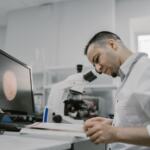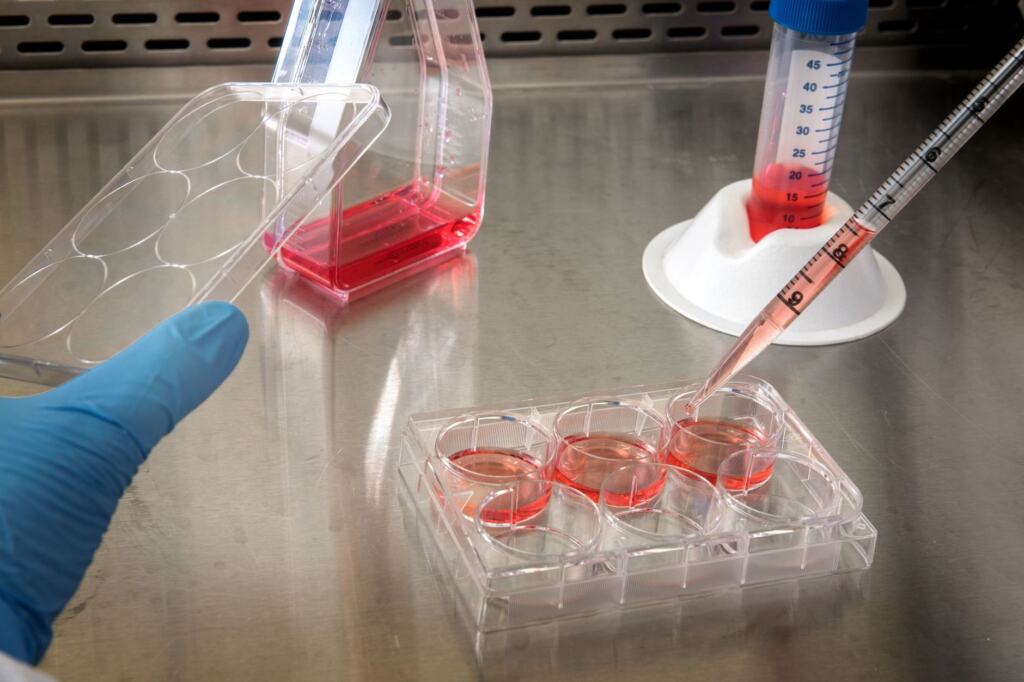
A patient faces several drug options and no clear way to rank them. Patient-derived organoids are lab cultures of that person’s own tumor cells, used to test drugs in the lab; they inform decisions but do not guarantee outcomes.
This guide covers how the models are built, what they can and cannot predict, and how long testing takes. It sits within the wider question of how is biotechnology used in medicine, with a focus on cancer care.
What patient-derived organoids are
Patient-derived organoids, also called tumoroids, are cultures of tumor cells derived from individual patients. Each line belongs to one person’s tumor, which is the main difference from a generic laboratory cell line.
The reason clinicians and researchers care is fidelity. According to the Association of Community Cancer Centers (ACCC), organoids preserve the histopathologic and genetic characteristics of human tumors, unlike traditional flat culture models. A drug test run on tissue that resembles the real tumor is more informative than one run on a model that has drifted away from it.
The table below separates three common assumptions from what the supporting material actually describes.
| Common assumption | What is supported | Planning use |
|---|---|---|
| It needs a large piece of tumor. | The starting material comes from tumor biopsies or surgical procedures, and a small amount of tissue can yield multiple organoids. | Ask whether a biopsy is enough before assuming surgery is required. |
| It is just another cell line. | The cultures come from individual patients and preserve histopathologic and genetic characteristics that traditional flat cultures do not. | Treat each organoid line as tied to one patient’s tumor. |
| Mouse models are the better stand-in. | Mouse models do not adequately reflect human cancer genetics and immune responses, and patient-derived organoids are described as a cheaper, faster and more biologically relevant model system. | Read organoid data as a human-derived complement to animal work, not a replacement for clinical judgement. |
The descriptions in the table draw on a laboratory-instrument overview of tumoroids and the ACCC article on individualized cancer care.
From biopsy to organoid
The route from a biopsy to a testable organoid follows a short sequence of laboratory stages. Each stage matters because the organoid can only be as representative as the tissue and handling that went into it.
- Collect the tissue. Tumor biopsies or surgical procedures supply the cells, so the sampling is part of care that may already be planned.
- Digest it. According to ACCC, the tumor tissue is broken down by enzymatic and mechanical digestion into single cells.
- Embed the cells. The single cells are placed in a gel dome, where they form organoids.
- Expand the culture. The cells can be expanded over multiple passages to produce large numbers of organoids.
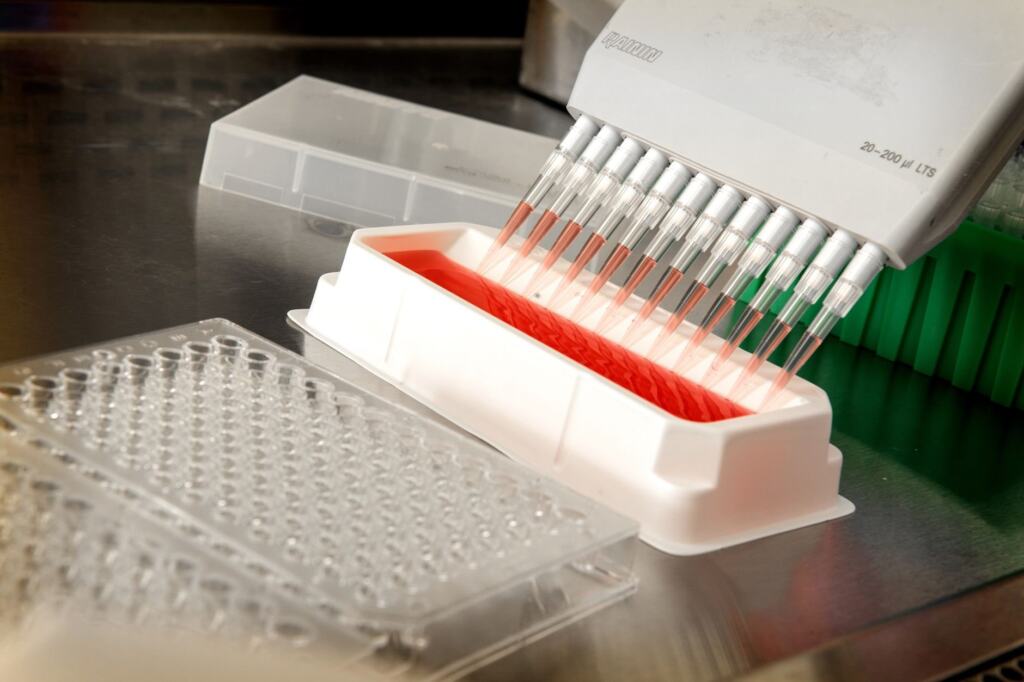
- Plate for testing. Tumoroids are incubated in multi-well plates when the aim is drug screening.
Expansion is the step that decides how much testing a single biopsy can support. A lab that grows large numbers of organoids can compare more drugs and doses from the same sample, while a thin culture limits the panel. That is a practical question to put to any lab offering the service.
Drug screening on organoid plates
Drug screening is where the organoids earn their place. Once the tumoroids sit in multi-well plates, each well can receive a different drug or dose, and the response is read out by imaging rather than by eye.
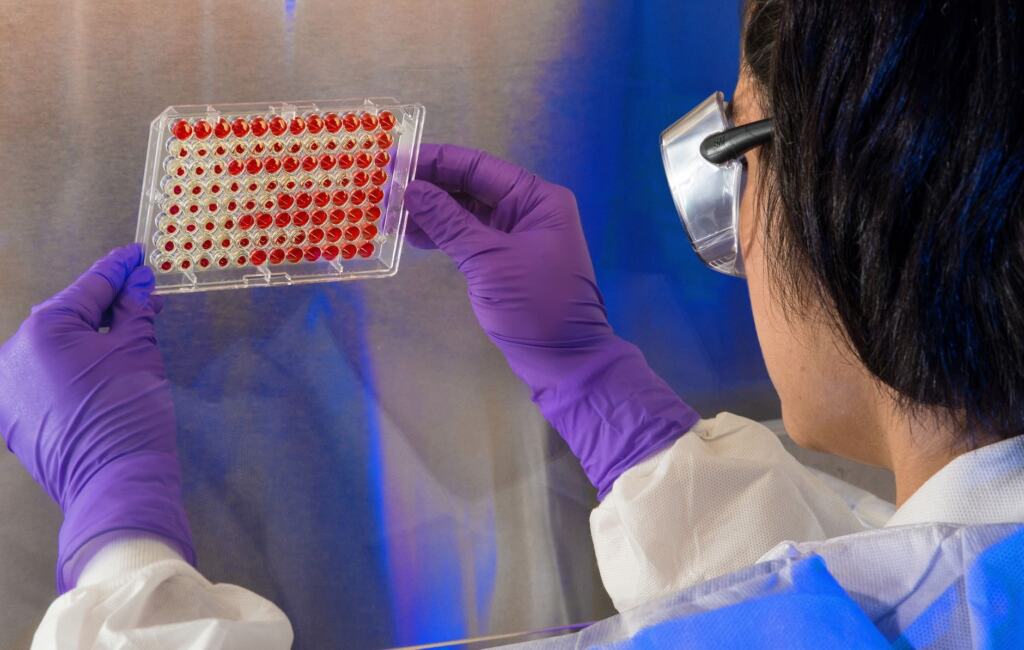
The laboratory-instrument overview explains that automated imaging and analysis of tumoroids are necessary for the quantitative assessment of dose-dependent drug responses. The measures it lists are size, area, marker intensity and cell count. Quantified readouts let a lab compare drugs on the same scale, which is what makes a ranking of options possible.
Dose-dependence is the feature to look for in any reported result. A response that changes in a graded way with dose is easier to interpret than a single yes-or-no reading, and it is the kind of output the imaging workflow is built to produce.
How accurately patient-derived organoids predict response
No single accuracy percentage describes every cancer type and every drug. What the supporting material establishes is why organoids are a reasonable predictive tool and where the claims stop.
- Fidelity is the foundation. Because organoids preserve the histopathologic and genetic characteristics of tumors, their drug responses have a plausible link to the tumor they came from.
- Predictivity depends on the drug class. A commercial organoid service says organoids often provide higher translational predictivity for certain therapeutic classes. The wording is “certain” classes, not all, and it is a provider’s statement rather than a trial result.
- Animal models set a low bar. ACCC states that mouse models do not adequately reflect human cancer genetics and immune responses, and that close to 90% of drugs passing animal testing do not end up approved by the FDA. A model that does better than that is useful even if it is imperfect.
- Wrong early signals are costly. ACCC, citing a JAMA study, notes that the total cost of bringing a drug to market is substantial once failures are counted, and that the path from preclinical work to bedside can range from 10 to 15 years or more.
For a patient, the sensible reading is that an organoid result is supporting evidence to sit beside the oncologist’s judgement, not a verdict. Ask whether the lab has evidence for the specific drug class and cancer type in question, because the case for prediction is strongest where that evidence exists and weakest where it does not.
Turnaround time
Drug responses can be evaluated in a relatively short time frame of 2 to 3 weeks, according to ACCC. A commercial service reports that assay-ready organoids can deliver efficacy data in only 3 weeks.
These figures answer different questions, so they should not be added together or treated as a promise. The ACCC window describes evaluating drug responses. The commercial figure refers to assay-ready organoids, meaning cultures that are already prepared for testing, which is not the same as starting from a fresh biopsy.
When timing matters, the useful question for a lab is what the quoted window includes. Ask whether the clock starts when the biopsy arrives or when drug exposure begins, and how long expansion takes beforehand. Organoids need expansion over multiple passages before large-scale testing, so a quoted testing window alone can understate the wait from sampling to answer. Where a treatment decision cannot wait, organoid results are better suited to guiding later lines of therapy than a first choice.
Where organoids fit in precision oncology
Precision oncology matches treatment to the features of an individual tumor, and organoids add a functional test to that picture: the patient’s own cells are exposed to the drug. ACCC says the approach makes it possible to design personalized treatment strategies in the future, which is accurate wording for a method still being established in routine care.
Two practical threads connect organoid work to the rest of the health system. Living patient material has to be collected, handled and moved with care, a challenge covered for another cell-based field in Building Reliable Cell & Gene Therapy Supply Chains: Critical Strategies For Safe, Scalable Delivery In 2026 – Biolifetechnologies. And the imaging readouts and genetic profiles that organoid programs generate become data to be stored and interpreted, a theme explored in AI And Big Data In Healthcare: How Smart Data Is Transforming Patient Care In 2026 – Biolifetechnologies.
Frequently asked questions
| Question | Answer |
|---|---|
| Which cancers appear in the organoid examples? | Breast tumoroids are incubated in multi-well plates for drug screening, and colorectal organoids have been shown to retain in vivo characteristics of the original tumor. ACCC also describes an ovarian cancer case in which organoids were treated with or without Taxol for 5 days. |
| Why does access outside trials matter? | ACCC notes that the majority of US cancer patients receive care at a community cancer center, and that most clinical trials occur in patients whose front-line therapy has failed. Testing that works in everyday clinical settings would therefore reach more patients than trial-only approaches. |
| Can organoids show what individual cells are doing? | Yes. According to ACCC, organoids can be used to study interactions on a single-cell level in real time, which complements the plate-level readouts used for screening. |