
Protein folding simulation uses physics-based or learned models to follow how an amino acid chain reaches its folded shape. Choose molecular dynamics for atomic detail and Monte Carlo or roadmap methods for speed. Expect long all-atom runs to be costly.
Simulation is one tool among many in the lab and on the computer. The wider toolkit, including answers to how do clinical trials work, is collected in the Biotech Research Methods hub, and the trade-offs between wet-lab and computational models are laid out in in vitro vs in vivo.
Why folding needs simulation
Simulation exists because the folding process itself is hard to watch. The Parasol group at the University of Illinois notes that experimental methods cannot operate at the time scales necessary to record protein folding and motions. A model fills that gap by describing the chain computationally and following how it moves, so researchers can ask which contacts form first and which intermediate shapes appear on the way.
The same group points out that understanding the folding process can give insight into how to develop better structure prediction algorithms. Simulation therefore serves two purposes. It explains how a protein folds, and it feeds the tools that predict where the fold ends up.
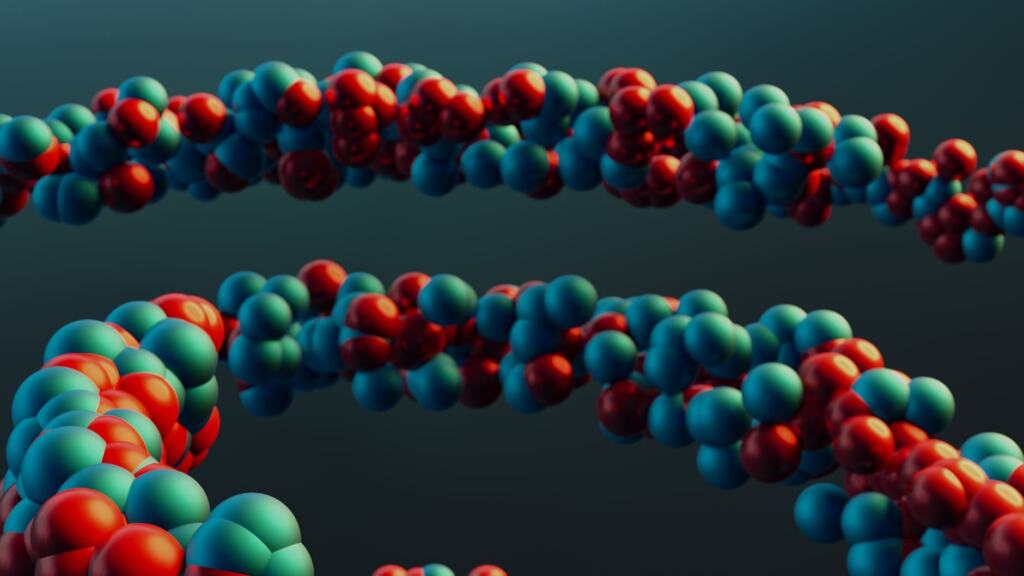
How a folding simulation runs
Most folding simulations follow the same sequence of stages, whatever the underlying method.

- Choose the representation. Molecular dynamics works at atomic resolution. Roadmap and Monte Carlo approaches sample shapes of the chain more coarsely to cover more ground.
- Sample motion. The method moves the chain through possible shapes, either by integrating motion in small time steps or by proposing conformational moves.
- Score the structures. Modern methods rely on a scoring function that tries to distinguish the native structure from non-native ones, as the Parasol group describes.
- Test the scoring function. Decoy databases, which are collections of non-native structures, are widely used to test and verify those scoring functions.
- Interpret the outcome. Read the result as a pathway, a trajectory or a ranked set of structures, depending on what the method produces.
The scoring step decides how far a result can be trusted. A sampler that explores widely but scores poorly will return plausible-looking shapes that are wrong, so a method’s scoring function deserves as much scrutiny as its speed.
Molecular dynamics, Monte Carlo and roadmap methods
Molecular dynamics
An MIT Media Lab project describes molecular dynamics simulation as a powerful approach to study protein motion at atomic resolution. Its weakness is time. The same project notes that the small time steps required for first-principles simulation severely limit the ability to study proteins over biological timescales. Molecular dynamics suits a detailed mechanistic question about a protein you can afford to simulate for long enough. It is a poor first choice for scanning many sequences.
Monte Carlo
Monte Carlo methods sample conformations through proposed moves rather than integrating motion. The Illinois group states that traditional techniques such as molecular dynamics and Monte Carlo are too computationally expensive for long folding timescales, which restricts long runs to small peptide fragments. Earlier master equation and Monte Carlo models were also too costly for large protein models. Map-based Monte Carlo has since been applied to a larger all-alpha protein, acyl-coenzyme A binding protein, at 86 residues.
Roadmap approaches
Roadmap methods borrow from robotics. They build a map of reachable conformations and search it for folding pathways. The Illinois group reports promising results for several small proteins of about 60–100 amino acids, and its method produces many folding pathways in just a few hours on a desktop PC. A multi-directional variant, mRRG, models the protein motion landscape with reduced computational time compared with other robotics-based methods, for small to moderate proteins. These methods suit teams that want many candidate pathways for a small protein without cluster access.
| Method | What it gives | Main limit | Planning use |
|---|---|---|---|
| Molecular dynamics | Atomic-resolution motion | Small time steps restrict biological timescales | Detailed mechanism for a single protein |
| Monte Carlo | Sampled conformations | Costly for large proteins and long timescales | Sampling low-energy states in small models |
| Roadmap (including mRRG) | Many folding pathways | Demonstrated on small to moderate proteins | Fast pathway scans on modest hardware |
| Learned acceleration (DeepJump) | Folding trajectories | Bias toward compact shapes near the native structure | Speeding up trajectory generation for fast folders |
The comparison draws on the Illinois Parasol group’s folding research and the MIT Media Lab’s accelerated folding project.
Software and compute in practice
Rosetta
Rosetta is the best-known software name in this space. RosettaCommons says it can predict the three-dimensional structure of proteins and other macromolecules based solely on their amino acid sequence. It also facilitates the prediction of how small molecules, such as potential drugs, bind to proteins. Rosetta is therefore best treated as a structure prediction and design suite. A dynamics engine is the usual choice when you need time-resolved motion rather than a predicted final structure.
Matching compute to the question
Compute cost follows the method’s sampling strategy, and the research sources give the following guidance:
- Modest hardware: the roadmap approach produces many folding pathways in a few hours on a desktop PC, which makes it a sensible entry point for small proteins.
- Predictable scaling: the running time of the roadmap-based MME analysis scales linearly with roadmap size.
- Heavy all-atom runs: because of the small time steps, long all-atom molecular dynamics is where cost climbs fastest. Plan cluster time, or use a coarser method first.
- Learned shortcuts: the DeepJump authors report orders-of-magnitude acceleration over classical methods for fast-folding proteins. Treat that as an author-reported result on fast folders, not a general guarantee.
A practical order of work is to screen cheaply with a coarse or roadmap method and reserve atomic-resolution dynamics for the few cases where mechanism matters. Whatever the route, test the scoring function against decoys before trusting rankings.
Simulation compared with AlphaFold
Simulation and AlphaFold answer different questions, so accuracy comparisons are not like for like. A structure predictor such as AlphaFold is judged on the final structure it returns. A folding simulation is judged on whether its pathway, intermediates and rates are physically reasonable. For the final fold alone, a predictor is the more direct tool. When the question is how or how fast the chain gets there, simulation is the only route, since experiments cannot resolve those timescales.
Folding questions can be concrete. Experimental studies show that two protein G mutants fold 100 times faster than protein G, and a model that cannot reproduce such a difference misses something about the pathway even if it predicts the end structure correctly.
What accelerated simulation shows so far
The MIT project on DeepJump offers the clearest accuracy signal among the learned approaches. Its authors find that DeepJump can successfully recover fast-folder dynamics with high accuracy, validated against reference free energy calculations. The same report lists limits. The model shows a bias toward compact conformations near the native crystal structure, and some replicas and model configurations fail to fold within tested timescales. Run replicates and expect occasional non-folding trajectories rather than reading every run as a prediction.
Where simulation sits in wider research
Folding models connect to other computational and cell-based work. Brain organoid studies, covered in Human Brain Organoids: What They Are, How They’re Made, and Why They Matter In 2026 – Biolifetechnologies, ask biological questions at the tissue scale. Protein modelling asks them at the molecular scale, and the two are best treated as complementary.
Frequently asked questions
How is protein folding simulated?
Researchers represent the chain computationally, sample its possible motions or shapes, and score the results. Molecular dynamics integrates atomic motion in small time steps. Monte Carlo and roadmap methods sample conformations more coarsely to reach longer timescales.
What software is used?
Rosetta is the structure prediction and design suite documented by RosettaCommons. Dynamics work uses molecular dynamics engines, and recent research tools such as roadmap methods and DeepJump target faster pathway or trajectory generation.
Can a desktop PC run a folding simulation?
For small proteins, yes with the right method. The Illinois roadmap approach generates many folding pathways in a few hours on a desktop PC. Long all-atom molecular dynamics is much more demanding.
Why do some simulated runs never fold?
Some replicas and model configurations fail to fold within the tested timescales, as the DeepJump report notes. Running replicates exposes this, and a failed run says more about sampling limits than about the protein.
Does simulation replace experiments?
No. Experiments cannot resolve folding timescales, which is the gap simulation fills, but scoring functions and models still need testing against known structures and decoy sets.