| Device | What it monitors | Planning use |
|---|---|---|
| Blood pressure cuff | Hypertension; the American Heart Association recommends remote vital-sign monitoring for these patients | Choose it when a program needs day-to-day readings rather than a single office measurement |
| Pulse oximeter | Blood oxygen and pulse, read through a finger clip (occasionally the earlobe) | Suits non-invasive spot checks that patients can do themselves |
| Smart scale | Weight changes, which matter in congestive heart failure because they often reflect water retention | Pair it with a heart failure pathway where weight trends trigger a clinical call |
| Blood glucose meter | Glucose levels in diabetes | Use it as the baseline diabetes device before considering continuous options |
| ECG and wearable rhythm monitors | Heart rhythm, used for arrhythmias and coronary artery disease | Reserve it for patients whose cardiac condition needs rhythm data rather than vital signs alone |
Device examples and conditions come from AHRQ PSNet, and the device-use descriptions from Health Recovery Solutions.
Remote patient monitoring devices are digital medical devices, such as weight scales, blood pressure monitors, pulse oximeters and blood glucose meters, that let clinicians track patients outside the traditional care setting.
Readers who want the wider context of how is biotechnology used in medicine will see where these tools fit among other health technologies. The sections below cover what changes for patients and clinicians, each device in turn, data handling, and payment.
Effects on care teams and patients
The main effect of remote monitoring is that clinicians see readings between visits, so decisions rest on trends instead of snapshots. AHRQ PSNet notes that studies have shown benefits of remote patient monitoring in managing diseases such as chronic obstructive pulmonary disease (COPD) and congestive heart failure (CHF), including fewer emergency department visits, readmissions avoided and shorter stays.
- Trends replace single readings. Day-to-day blood pressure monitoring gives insight into daily status that one clinic measurement cannot. A program built on this suits patients whose readings swing between visits.
- Earlier warning in heart failure. A steady or rapid gain in daily weight may signal fluid retention, and the same source states patients can gain as much as 10 pounds of fluid weight before other symptoms appear. A daily scale routine is therefore the first thing to put in place for these patients.
- A control gap in hypertension. Only about one in four US adults with hypertension have it under control, according to the same Prevounce article. That gap is the context for the American Heart Association recommendation of remote vital-sign monitoring cited by AHRQ.
- Rising workload for the care team. More data means more alerts to review. Decide in advance who reads the readings and what counts as urgent, otherwise the benefit of earlier warning is lost.
Devices and the conditions they monitor
AHRQ says remote monitoring has historically measured symptoms of chronic conditions such as cardiac diseases, diabetes and asthma. The device should follow the condition, not the other way round.
Blood pressure cuffs
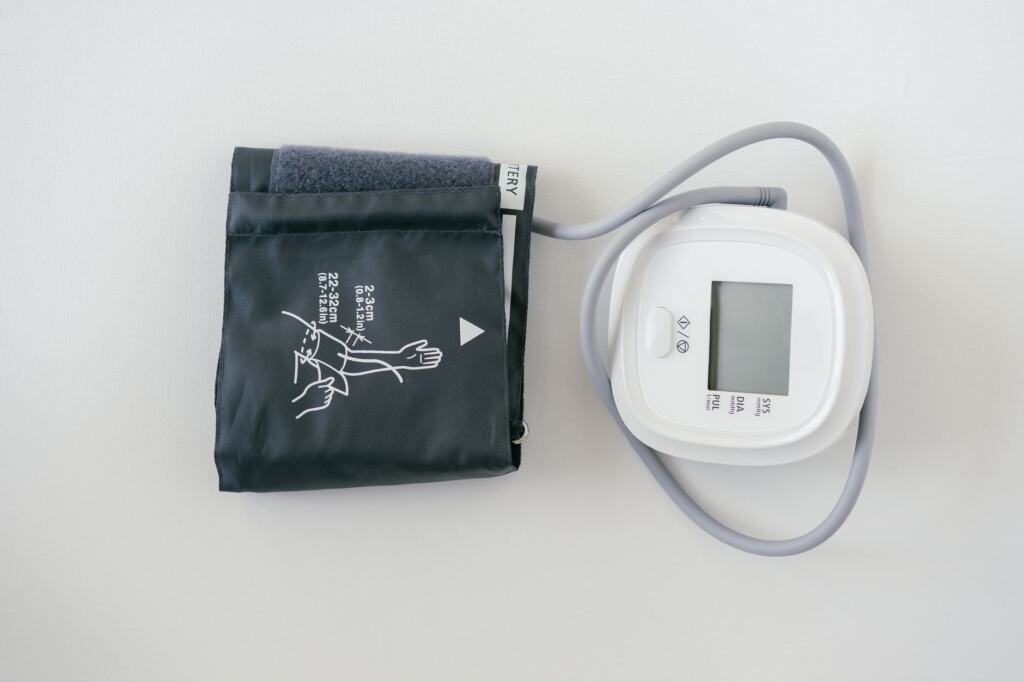
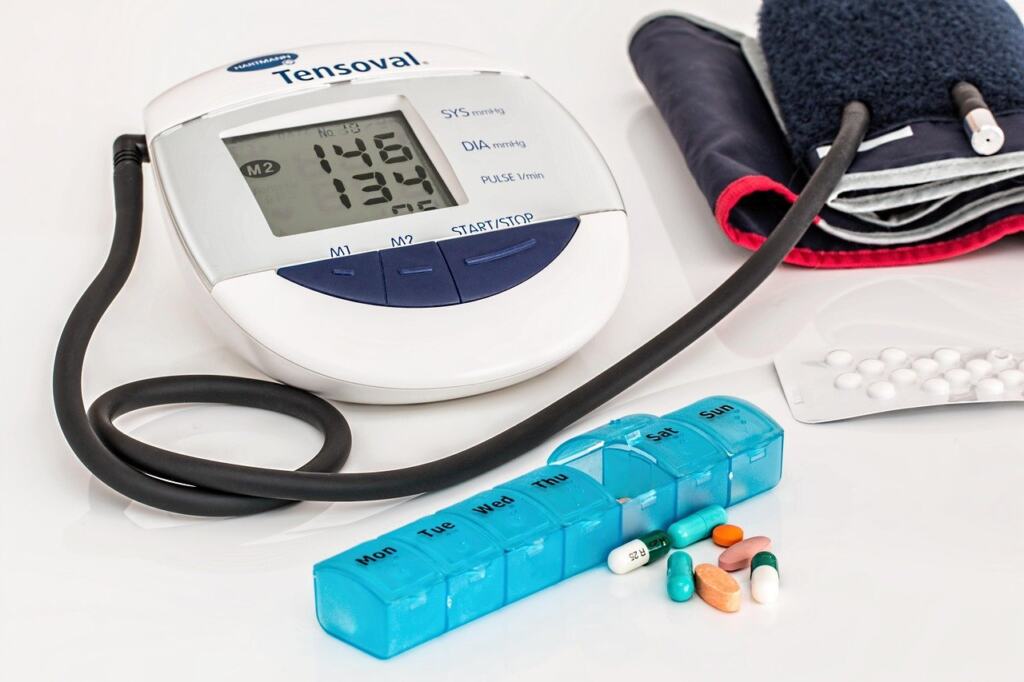
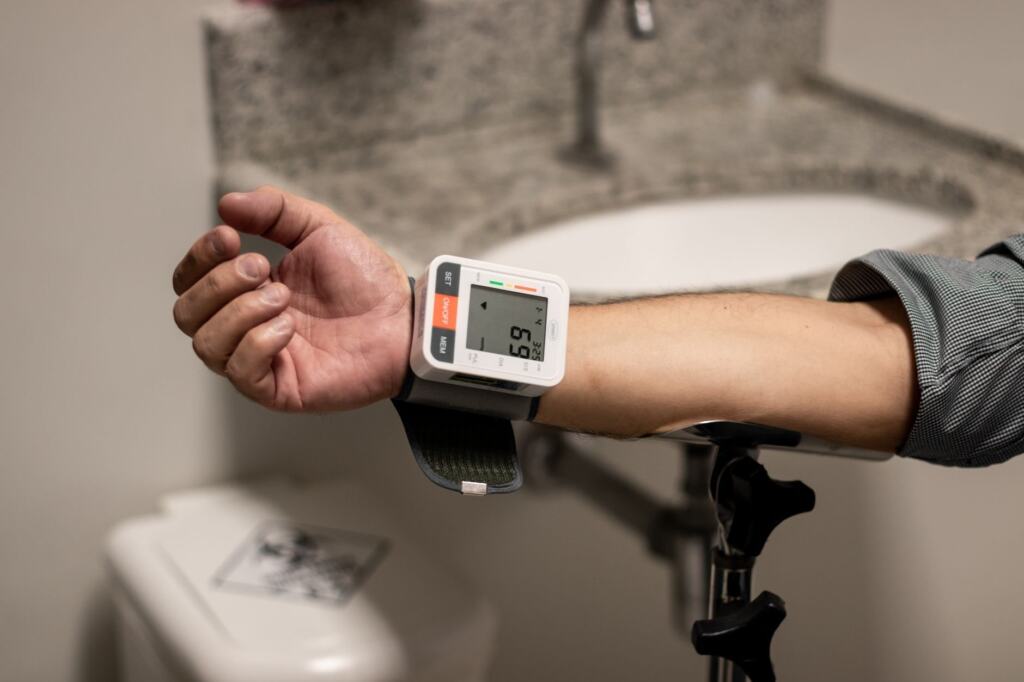
A home blood pressure cuff is the standard tool for hypertension programs. Because the readings arrive daily, the care team can judge whether treatment is working between appointments. Wrist-worn monitors are one format, though a cuff must still be fitted and used correctly for the reading to be useful.
Pulse oximeters
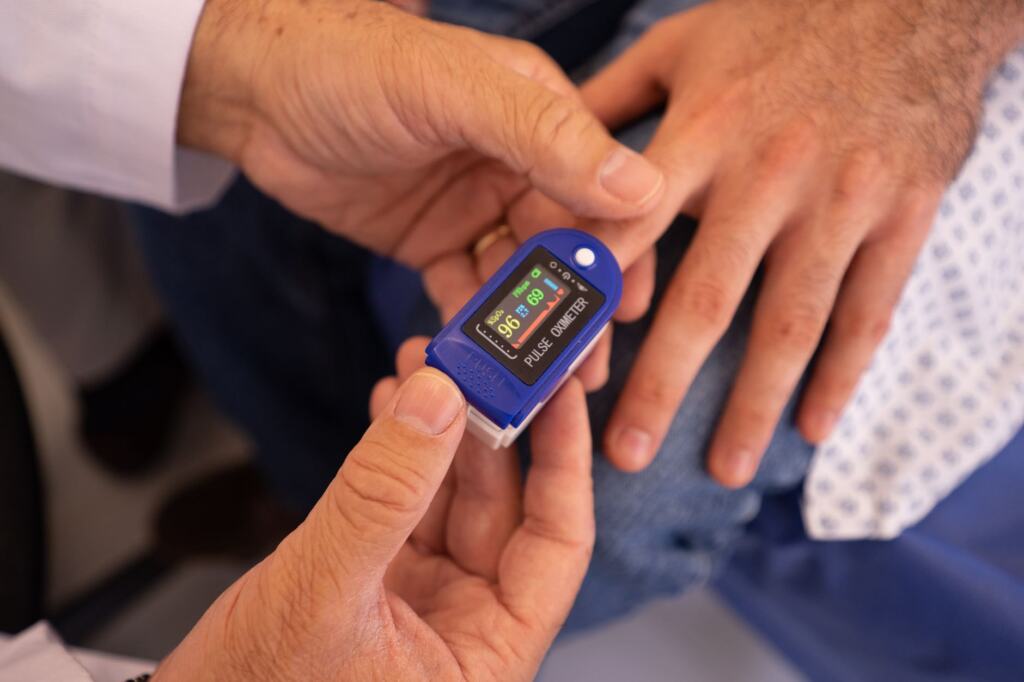
The pulse oximeter is a non-invasive clip attached to a finger, and occasionally the earlobe, that measures blood oxygen and pulse. For COPD, a connected pulse oximeter can enable remote monitoring of blood oxygen levels. It suits patients who can manage a simple daily check without help.
Smart scales
Smart scales send each weight reading to the care team automatically. In CHF, weight fluctuations are often a result of water retention, so the scale is described by Health Recovery Solutions as essential for these patients. Skip it for conditions where weight carries no clinical signal.
Glucose meters and continuous glucose monitors
Remote monitoring for diabetes includes both standard glucose monitoring and continuous glucose monitoring (CGM), according to Prevounce. The need is large: in 2021 more than 38 million Americans, close to 12% of the population, had diabetes, and blood sugar testing is essential to managing diabetes and preventing complications. A standard meter fits patients who need periodic checks. A continuous monitor suits those whose care team wants a steady stream of values. Asthma is also common, with more than 27 million US adults, about 8%, affected, and Oracle lists smart inhalers among the devices used in remote programs.
ECG patches and heart rhythm wearables
ECG monitoring is commonly used for patients with cardiac conditions like arrhythmias or coronary artery disease. AHRQ names Holter monitors as wearable devices that measure heart rhythms. Choose this category when rhythm is the clinical question, since a cuff, scale or oximeter will not answer it.
How readings reach the care team
Remote patient monitoring is a type of telehealth in which providers monitor patients outside the traditional care setting, as AHRQ defines it. Oracle describes FDA-approved devices that measure and report heart rate, lung capacity and glucose levels. A patient takes or wears the measurement, the device reports it, and clinicians review it.
Not every program needs added hardware. Some systems let patients use their own devices, such as a smartwatch or phone. That route suits patients who already own a compatible device and avoids shipping equipment, while condition-specific devices remain necessary where the reading is not something a phone captures.
The Bipartisan Policy Center has recommended that HHS ensure standards are in place for these devices to interoperate with electronic health records. Until such standards are uniform, ask any vendor how readings enter the chart, so staff are not re-keying numbers.
Privacy and data access
Oracle states that the security of patient data needs to be top of mind for healthcare organizations implementing remote monitoring programs. It also says data must be stored in systems that allow access only to the people who need to view it. In practice, that means asking a vendor where readings are stored and which staff roles can open them before any device goes home with a patient.
Patients can apply the same test. Ask who sees the readings, and whether a phone or smartwatch used as a monitoring device sends data to anyone beyond the care team.
CMS reimbursement and payer coverage
AHRQ reports that, before the public health emergency, the Centers for Medicare & Medicaid Services (CMS) implemented new billing codes and expanded coverage of remote monitoring, with further waivers following when the emergency began. The financial effect was large: CMS reimbursements increased 19-fold between 2019 and 2021, from $5.5 million to more than $101 million.
Coverage outside Medicare is uneven. As of March 2023, 34 state Medicaid programs covered remote monitoring services, though many restrict use in some way. Check the specific payer rules for the patient group in question before enrolling anyone, since a covered service under one program may not be covered under another.
Choosing devices and starting a program
Start from the condition, then match the device: a cuff for hypertension, a scale for heart failure, a meter or continuous monitor for diabetes, an oximeter for blood oxygen, and a rhythm wearable for arrhythmias. Add only what the care pathway will act on.
- Suits a pilot: a single condition with one device type and a named clinician reviewing alerts.
- Wait on: broad rollouts until payer coverage and chart integration are confirmed.
- Choose something else: if a patient cannot manage daily readings, pick a simpler device or a less frequent schedule rather than adding more equipment.
Remote monitoring also sits alongside other digital tools, and readers tracking how algorithms are entering care can compare with AI In Healthcare Statistics: Key Trends, Impact, And What 2026 Data Reveals – Biolifetechnologies.
Frequently asked questions
Can patients use their own smartwatch or phone?
Yes, in some systems. Oracle notes that some programs let patients use their own smartwatch or phone, so no added equipment is needed.
Is remote patient monitoring the same as telehealth?
It is one type of telehealth, according to AHRQ PSNet. For how telehealth and telemedicine differ, see Telemedicine vs. Telehealth: What’s The Difference And Which One Should You Use In 2026? – Biolifetechnologies.
What discourages organizations from expanding monitoring programs?
AHRQ PSNet points to lack of coverage and lower reimbursement rates, along with upfront costs, as disincentives for organizations considering expansion.