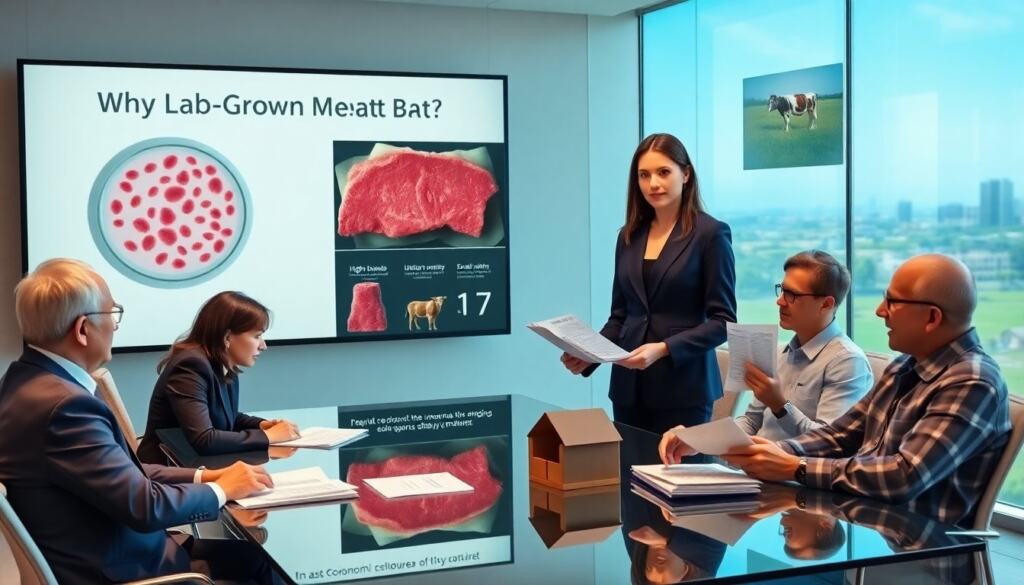
Why lab-grown meat is bad appears in headlines and debates. The claim raises questions about safety, environment, and society. This piece lists clear concerns. It uses plain facts and direct examples. It helps readers weigh risks before they accept cultured meat as a solution.
Key Takeaways
- Lab-grown meat poses health and safety uncertainties due to unknown long-term effects and potential allergenicity from novel proteins and additives.
- Environmental benefits of cultured meat vary widely, as high energy use and resource demands can offset its green claims depending on regional energy sources.
- The cultured meat industry’s growth may concentrate market power, increase food inequality, and threaten small farms and rural jobs.
- Cultural preferences, taste differences, and regulatory challenges could impede widespread adoption of lab-grown meat despite technological advances.
- Transparent safety testing, clear labeling, and independent oversight are essential for public trust and responsible integration of cultured meat into food systems.
Health And Safety Uncertainties Around Cultured Meat
Scientists study lab-grown meat and report open questions about health. The process grows animal cells in nutrient broth. That broth can contain growth factors, antibiotics, and serum components. Regulators may clear some products, but long-term effects remain unknown. Consumers may react to novel proteins or additives. Foodborne pathogens may behave differently in cultured tissue than in whole animals. Producers must control contamination during many production steps. They must also monitor for unexpected toxins or altered fat profiles. The industry may use genetic edits to speed growth. Genetic edits can change protein structure and allergenicity. Independent labs must test final products for allergens, hormones, and residues. Many studies come from companies with business ties. That link can bias results or limit data sharing. Public health agencies need full data before wide adoption. The public must see transparent safety testing and real-world monitoring plans. Without that, people cannot fully trust the claim that lab-grown meat is safer than conventional meat.
Environmental And Resource Trade-Offs That Challenge The Green Narrative
Proponents say lab-grown meat uses less land and cuts emissions. Some studies support those gains under specific scenarios. Other analyses find high energy use in cell cultivation and bioreactor operations. High electricity demand can raise greenhouse gas emissions if grids rely on fossil fuels. The production needs sterile facilities, pure water, and refined nutrients. Those inputs require industrial processing and transport. The supply chain can hence shift environmental burden rather than remove it. Waste streams from growth media and single-use plastics can create disposal challenges. Scaling production to meet current meat demand will need massive energy and material inputs. The life-cycle impact will vary by location and energy mix. Regions with clean electricity may see real emissions reductions. Regions with coal or natural gas may see worse outcomes. The claim that lab-grown meat always reduces footprint does not hold across all conditions. Policymakers should require full life-cycle analyses before promoting cultured meat as an environmental fix.
Economic, Social, And Ethical Concerns
The cultured meat industry can reshape food markets and labor. Large firms plan to scale production in centralized plants. Small farms may lose buyers and market access. Corporations may hold patents on cell lines and production methods. Those patents can limit who can make similar products. That setup may concentrate power and profit in a few companies. Consumers in low-income areas may face higher prices for lab-grown meat, at least early on. That pricing can widen dietary inequality. The industry may push regulatory frameworks that favor industrial production over local food systems. Those rules can further disadvantage small producers.
Job Losses, Food Sovereignty, And Inequity Risks
The shift to cultured meat can cut jobs in slaughter, processing, and transport. Rural communities may lose income streams tied to animal agriculture. Nations that rely on livestock exports may see market disruption. Food sovereignty can decline if communities cannot access or produce these new products. The technology may require imported equipment and expertise. That reliance can strengthen dependency on foreign firms. Ethical debates also arise. Some people oppose cultured meat on moral grounds related to consumer choice and tradition. Others question whether lab-grown meat respects animal welfare if it still uses animal-derived inputs. Policymakers should assess social impacts and design transition programs. They should offer retraining, investment in local food systems, and rules to prevent market concentration.
Cultural, Sensory, And Regulatory Barriers To Widespread Adoption
Many consumers judge meat by taste, texture, and cultural meaning. Lab-grown meat can mimic some sensory traits, but subtle differences often remain. Taste panels sometimes report off-flavors or different mouthfeel. People may reject cultured meat for cultural or religious reasons. Religious authorities must review production methods and certify products. Those reviews can slow market access. Labels will shape consumer trust and buying choices. Vague or marketing-heavy labels can mislead shoppers. Clear rules on labeling are necessary. Regulators must define safety, labeling, and marketing standards. They must also set monitoring for long-term health outcomes. The regulatory process can be slow and uneven across countries. That unevenness can create trade disputes and market fragmentation. Firms may push for fast approvals to gain first-mover advantage. That pressure can lead to shortcuts in testing, intentional or not. Public campaigns and independent testing can help consumers decide. Without clear taste wins, cultural acceptance, and robust rules, lab-grown meat may struggle to reach scale even though heavy investment.