
| Question | Telemedicine | Telehealth | Planning use |
|---|---|---|---|
| Scope | Remote clinical services only | Remote clinical and non-clinical services | Ask whether you are booking a clinical visit or a broader programme before you commit. |
| Relationship | Sits under the telehealth umbrella | All-encompassing; telemedicine and telecare fall under it | Treat telemedicine as one service type inside telehealth, not a rival option. |
| Example uses | Follow-up visits, medication management, chronic care management, post-operative care | Administrative meetings, provider-to-provider consultation, continuing medical education, provider training | Match the label to the task: patient care points to telemedicine, while staff and training activity points to telehealth. |
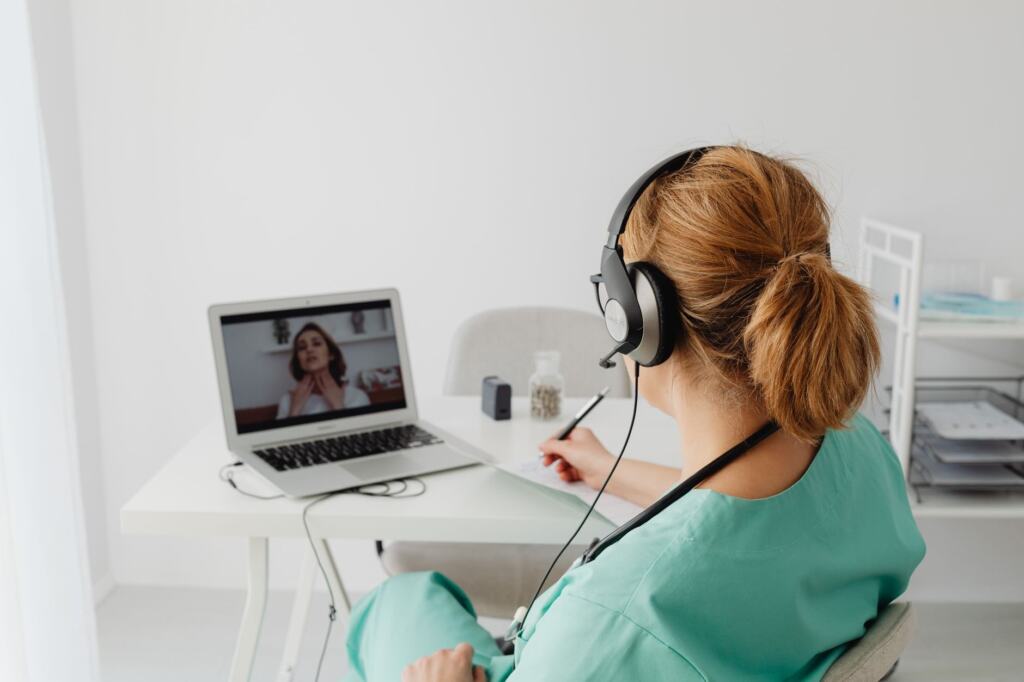
| Video calls | Provider-patient video used for care | Provider-staff video, such as training or administration | A video call alone does not make something telemedicine; check who is on the call and why. |
Definitions follow this telemedicine and telehealth comparison and this overview of the telehealth umbrella.
Telemedicine vs telehealth comes down to scope: telemedicine covers only remote clinical services, while telehealth adds non-clinical ones such as provider training. Pick by task, then confirm coverage and state rules.
Telehealth is one slice of the wider question of how is biotechnology used in medicine, and the choice between the two terms matters most when money, licensing or safety are involved.
What the difference changes in practice
The labels affect what you are asking for, who is responsible for your care and what you should confirm before a visit. For most patients the practical result is a short checklist rather than a technical debate.
For patients booking care
If you need a diagnosis, a treatment recommendation or a follow-up, you want telemedicine. If you are signing up for something broader, such as monitoring or education, you are in wider telehealth territory. A useful way to apply this:
- Need a clinician’s judgement on a symptom or medication: book a telemedicine visit. These platforms are typically HIPAA-compliant video appointment systems centred on diagnosis, treatment recommendations and follow-ups, according to a practice-software explainer on virtual care.
- Managing a long-term condition: telemedicine is used for chronic care management and medication management, so a video visit can handle the clinical check-in while other telehealth tools support the rest.
- Recovering after a procedure: post-operative care is a common telemedicine use, which suits patients who would otherwise travel for a brief review.
- Living far from care or short of time: patients who face distance, time or cost barriers can see a physician without leaving home, which is the clearest argument for starting with a remote visit.
For providers and practices
Providers should treat the two terms as different compliance scopes. Telehealth regulations and reimbursement policies differ by country and state, so due diligence comes before launching any remote service, as VSee’s telemedicine guide advises. Clinical visits and non-clinical activity such as staff meetings or training are not the same offering, and a clinic that merges them in its paperwork invites confusion about what is billed and what is not.
Providers weighing automated front-door tools alongside video visits can also read Conversational AI In Healthcare: How Voice And Chat Assistants Are Transforming Patient Care In 2026 – Biolifetechnologies for how voice and chat assistants fit into patient care.
Insurance coverage and licensure
Coverage is the question patients ask most, and the honest answer is that it depends on the payer, the state and the specific service. Regulations and reimbursement policies sit at both the federal and the state level, and they change over time, as the Meditab comparison points out. A rule you read last year may not apply today.
- Ask about the service, not the label: tell your insurer exactly what you are booking, such as a video visit, a monitoring programme or an app-based service, and ask whether that item is covered and what you would owe.
- Check the clinician’s licence for your location: licensure is governed by state rules, so confirm that the clinician may treat you where you are before the appointment, especially if the provider is based in another state.
- Confirm billing in advance: if a service comes with a device or an app, ask whether those are included, because coverage may treat the visit and the equipment differently.
- Providers, verify before launch: check federal and state telehealth regulations and your payers’ reimbursement policy before offering a new remote service.
Because the policies move, a current answer from your insurer or the provider’s billing office is more reliable than any general rule of thumb.
When in-person care is the better choice
Telemedicine suits conditions that can be judged through conversation, a visual check or data sent by the patient, such as follow-ups, medication review and post-operative reviews. It is a poor fit when the problem needs hands-on examination or testing that a camera cannot provide.
- Urgent or severe symptoms: go to emergency care in person rather than waiting for a video appointment.
- When the clinician asks: if the remote clinician says an examination, test or procedure is needed, book it promptly instead of repeating video visits.
- When the connection fails: a visit cut short by poor connectivity or device problems should be rebooked, in person if the issue cannot wait.
- When a remote visit is enough: store-and-forward exchanges, where images, lab results or video exam clips are sent outside a live session, work for consultations in which face-to-face contact or live video is not needed.
A sensible habit is to start with a remote visit for low-risk issues and ask the clinician at the end how to reach in-person care if symptoms change.
Telehealth beyond the video visit
Telehealth reaches well past appointments. One framework from CCHP, summarised in a telemedicine and telehealth comparison, lists four applications: live video, store-and-forward, remote patient monitoring and mobile health. Only the first is closely tied to the familiar video appointment.
Remote patient monitoring
Remote patient monitoring uses devices to collect medical data from a person and transmit it electronically to a provider or monitoring station. The data can include vital signs, blood sugar, blood pressure, heart rate and ECG. It lets remote caregivers monitor patients who live at home, which is why it suits people managing a chronic condition between visits.

For device types, adoption and benefits in more depth, see Remote Patient Monitoring Devices: The Practical Guide To Benefits, Types, And Adoption In 2026 – Biolifetechnologies.
Choosing between a visit and a programme
Pick a telemedicine visit when you have a question that needs a clinician’s decision today. Pick a monitoring or mobile health programme when the goal is to follow a condition over time. Many people use both: the monitored data informs the next video visit.
How the terms are defined
The confusion comes from layered vocabulary. Telehealth is the all-encompassing term, with telemedicine and telecare under it, according to VSee’s overview. The HealthIT.gov definition, as quoted there, describes the use of electronic information and telecommunications technologies to support long-distance clinical health care.
Two neighbouring terms sit at either end of that scope:
- Virtual care: an even broader umbrella covering any interaction between patients and healthcare providers by digital means, according to Raintree’s discussion of virtual care.
- Virtual visits: a narrower subset of telehealth centred on real-time video or audio consultations, as Accuhealth’s comparison describes.
Media, payers and clinics do not always use these words consistently, so judge a service by what it actually involves rather than by its name.
Frequently asked questions
What is the difference between telemedicine and telehealth?
Telemedicine refers only to remote clinical services. Telehealth includes those and non-clinical services such as administrative meetings, continuing medical education and provider training.
Is every video call with a healthcare worker telemedicine?
No. Video between a provider and a patient for care is telemedicine, while video between a provider and staff, for training or administration, is telehealth.
Does insurance cover telemedicine and telehealth?
It depends on the payer, the state and the service. Reimbursement policies are set at federal and state level and change over time, so ask your insurer about the specific service before booking.
Which should I use for ongoing monitoring at home?
Remote patient monitoring, a telehealth application, suits this. Devices send data such as blood pressure or heart rate to a provider, and a telemedicine visit can follow when a clinician needs to act on it.