A grower asks whether biotech means higher-yielding seed. Examples of biotechnology in agriculture mostly protect yield or quality: Bt corn, herbicide-tolerant soybeans, drought-tolerant corn, golden rice, potatoes and apples.
The broader question of how does biotechnology help the environment is handled across our sustainable biotechnology section. This guide stays with crops, traits and the measured outcomes attached to them.
What counts as agricultural biotechnology
Biotechnology is any application that uses living organisms to obtain goods, products or services, according to CropLife Latin America. In farming, the best-documented applications are biotech crops. The main traits on the market are tolerance to insects and to herbicides, in soybean, cotton, corn and canola. Newer traits include tolerance to water stress (drought) in corn and soybeans, and consumer-facing traits in crops such as potatoes and apples.
That narrow range of traits explains most of the confusion. People often picture one technology that changes everything about a crop. In practice each product is one gene or trait aimed at one problem: a pest, a weed, a dry spell, a bruise or a nutrient gap. The sections below take the common misunderstandings first, then walk through seven concrete examples.
Common misunderstandings about biotech crops
Four assumptions come up repeatedly. The table sets each against what the evidence shows and what that means for a decision.
| Assumption | What the evidence shows | Planning use |
|---|---|---|
| Biotech seed raises yield potential | Over the first 15 years of commercial use, genetically engineered seeds have not been shown to increase the yield potential of the varieties. By protecting the plant from certain pests, they can prevent yield losses to those pests. | Judge a trait by the pest or weed pressure it removes, not by a promised jump in yield. |
| Biotech crops are a niche product | US farmers planted about 169 million acres of biotech corn, soybeans and cotton in 2013, almost half of US crop land. Herbicide-resistant soybeans made up 93% of soybean acreage; corn and cotton with herbicide tolerance and/or insect resistance made up 90% of their respective acreage. | In US corn, soybean and cotton, trait seed is the mainstream choice, so the real decision is which trait fits the field. |
| Insect-resistant crops lower insecticide use | Insecticide use on all corn farms declined sharply after Bt corn was adopted. | Bt traits suit growers whose main cost is insect control. |
| Biotech and conventional crops are judged the same way | Targeting a single plant trait through genetic recombination reduces the unwanted traits that can come with a conventional cross. | Ask which single trait a variety adds and whether that trait matches your problem. |
Figures are from the Global Farmer Network summary of US biotech crops, which draws on USDA data.
Seven examples with traits and outcomes
1. Bt corn
Insect-resistant Bt crops carry a gene from the soil bacterium Bacillus thuringiensis. In corn, farmers who had previously controlled corn borer infestations with insecticides lowered their pesticide costs and increased their yields after switching, as the Global Farmer Network reports. The benefit is tied to that pest pressure: a grower with little borer damage has less to gain. In the US, the Environmental Protection Agency regulates a plant as a pesticide when it is engineered to prevent, destroy, repel or mitigate pests, which is why Bt traits fall under pesticide rules.
2. Herbicide-tolerant soybeans
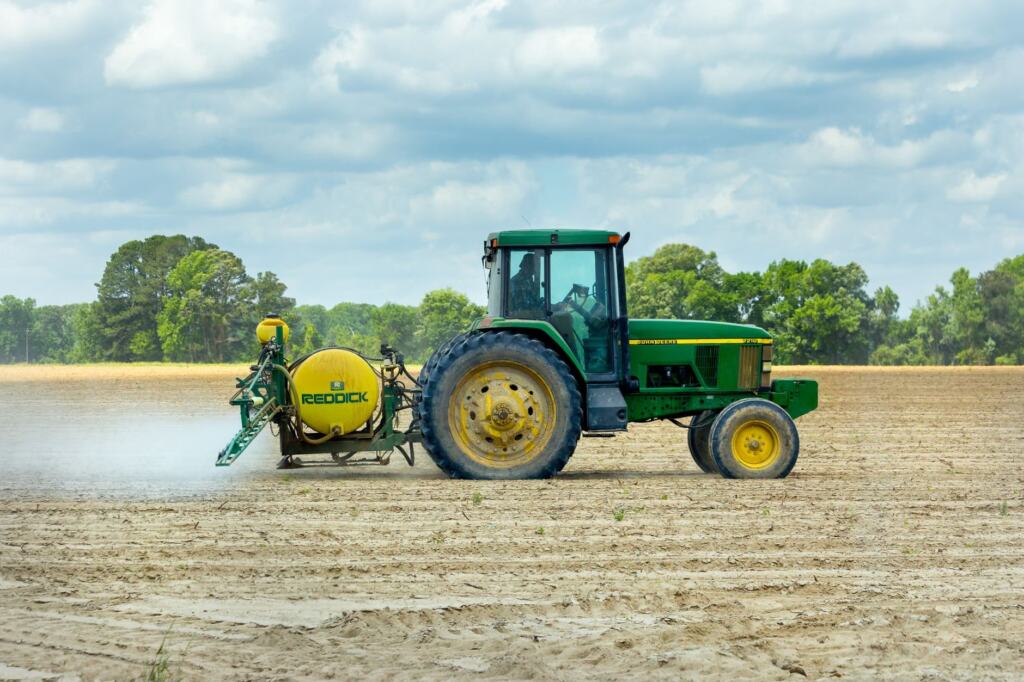
Herbicide-tolerant varieties let a grower use a herbicide that the crop survives. The trait reached 93% of US soybean acreage in 2013. Herbicide-tolerant crops have also helped spread no-till farming, because they allow more effective weed-control systems. The suitable buyer is a grower who wants simpler weed control and fewer tillage passes.
3. Insect- and herbicide-tolerant cotton
Cotton carries the same trait families as corn. Corn and cotton with herbicide tolerance and/or insect resistance accounted for 90% of their respective acreage. Canola belongs to the same trait group among the crops on the market, according to CropLife Latin America.
4. Drought-tolerant corn and soybeans
Tolerance to water stress is the newer trait in corn and soybeans. It targets dry spells rather than a pest. Treat it as protection against a stress, not as a way to raise the ceiling on yield.
5. Golden rice
Golden rice adds beta-carotene to the grain. It is the clearest example of a trait aimed at nutrition rather than pest or weed control. The same industry source describes it as an additional benefit built into the crop, without stating a quantity, so nutrition claims should stay at the level of the trait itself.
6. Bruise-resistant potatoes
Potatoes with resistance to bruising and oxidation are a consumer-facing example. The trait concerns quality after harvest and handling, not field pests.
7. Non-browning apples
Apples that do not rust, meaning they resist browning once cut, work on the same principle: one trait that changes how fruit looks after handling.
Are GMO crops good for the environment?
They can be, depending on the measure, and the supported gains are specific rather than sweeping. The clearest figure is insecticide use on US corn farms, which fell from 0.21 pound to 0.02 pound per planted acre between 1995 and 2010. A second gain is practical: herbicide-tolerant crops helped spread no-till farming through more effective weed control. A third is indirect: by preventing losses to pests, biotech crops let a field come closer to the yield it was already capable of.
The limits matter just as much. These results describe US corn, soybean and cotton, and the yield benefit comes from avoided losses, not from a higher potential. A grower or reader should therefore read an environmental claim as trait-specific: Bt corn and insecticide, herbicide tolerance and tillage, not biotech as a whole.
Adoption, scale and development cost
Adoption data in the US come from the USDA National Agricultural Statistics Service June Agricultural Survey, which underlies the tables published by CropLife’s biotech benefits paper. Worldwide, the area of genetically modified crops grew by almost five million hectares in 2017.
Field testing is part of the pathway. The USDA Animal and Plant Health Inspection Service plays a primary role in regulating field testing of agricultural biotechnology products, and a cumulative 17,000 releases were granted. That volume of testing fits the effort behind each product: an industry source describes biotech crop development as resting on 13-15 years of research and an investment of over US$136 million.
How CRISPR is used in crops
CRISPR is a gene-editing approach to crop improvement, and its logic is the same one that makes the examples above work: change one targeted trait instead of reshuffling a whole genome. Targeting single plant traits through genetic recombination techniques reduces the unwanted traits that can accompany a conventional cross, as the Global Farmer Network explains for biotech crops in general.
The practical rule for reading any gene-editing claim is to ask for three things: the crop, the single trait changed and the measured outcome. The seven examples above meet that standard, and an edited-crop claim that cannot name all three is a promise, not a result.
Related reading
Biotechnology also works away from the field. What Is Precision Fermentation? The Practical Guide to Making Animal-Free Proteins in 2026 – Biolifetechnologies follows microbes into food production, while Green Hydrogen Vs Blue Hydrogen: Which Clean Fuel Wins In 2026 — Costs, Emissions, And Real-World Uses – Biolifetechnologies covers a different sustainability technology with its own cost and emissions trade-offs.
Frequently asked questions
| Question | Answer |
|---|---|
| Who oversees biotech crops in the US? | Federal oversight is shared by USDA, EPA and FDA. USDA’s APHIS plays a primary role in regulating field testing, and EPA regulates a plant as a pesticide if it is engineered to prevent, destroy, repel or mitigate pests. |
| Why do farmers choose biotech seed? | In a USDA survey as reported by the Global Farmer Network, about 75% of cotton and corn farmers said they use it to increase yields. The evidence suggests the gain comes from preventing losses to pests rather than raising yield potential. |
| How many farmers have benefited financially? | PG Economics estimated US$186.1 billion in profits from genetically modified crops across about 17 million farmers between 1996 and 2016, as cited by CropLife Latin America. This is an industry-cited estimate of cumulative profit. |
| How long does it take to develop a biotech crop? | An industry source describes 13-15 years of research and an investment of over US$136 million behind a biotech crop. |