| Situation | What happens | Planning use |
|---|---|---|
| Conventional plastic such as polyethylene left in the environment | Bacteria and fungi do not recognise it as food, so it fragments through sunlight and friction instead of biodegrading | Treat it as persistent. Reduce use and sort it for recycling rather than relying on nature. |
| Certified compostable item in an industrial composting facility | Disintegrates within 12 weeks and biodegrades by at least 90% within 180 days | Choose it only where a local facility accepts it. |
| PLA outside industrial composting | Needs composting above 58 °C and 50% relative humidity; most home composters cannot reach or hold that heat | Keep PLA out of the home compost heap. |
| Compostable plastic in a landfill | Persists much like its conventional counterpart, because landfills are sealed and have few microorganisms | Do not treat landfill as a way to dispose of compostable plastic. |
| Oxo-degradable plastic | Disintegrates into smaller pieces called microplastics | Avoid it; the claim describes fragmentation, not biodegradation. |
| Bio-PET | Chemically identical to oil-based PET, so it does not biodegrade | Do not assume a plant-based origin means a product breaks down. |
Figures above come from Madison Group’s review of plastics sustainability and Bubble Paper’s explainer on biodegradable plastics.
Is plastic biodegradable? Conventional plastic is not: it fragments rather than biodegrades. Only plastics certified as compostable break down fully, and only in industrial composting conditions.
If you are asking how does biotechnology help the environment, the Sustainable Biotechnology hub puts this question in a wider context. This guide focuses on what decides whether a plastic item actually breaks down.
What biodegradable labels mean in practice
The word “biodegradable” tells you very little by itself. Every material will biodegrade if given enough time, according to Madison Group, so the useful question is how long it takes and under what conditions. Duration depends on the environment, which is why a bare claim cannot guide a disposal decision.
“Compostable” is the narrower claim that can be tested. Only plastics that meet the defined biodegradation requirements in recognized ASTM, EN or ISO standards can be designated compostable. Origin is a separate matter: bio-based plastics are not always biodegradable.
- Look for a named standard. A product that cites ASTM D6400, EN 13432 or ISO 17088 has a testable claim behind it. “Eco” or “biodegradable” with no standard does not.
- Read “biodegradable” as incomplete. Ask where, and over what period, the item is meant to break down.
- Do not equate plant-based with breaks-down. Origin and end-of-life behaviour are separate properties, as the Bio-PET example below shows.
Disposal decisions for compostable and conventional items
Where you put a compostable item matters more than the label on it. The right bin depends on what your local system actually accepts.
- Home compost heap: Not suitable for PLA. Most home composters cannot reach or sustain the temperature PLA needs, according to Madison Group.
- Food-waste or biowaste collection: Check before adding cups or cutlery. GoEcoPure advises that biodegradable cups and cutlery do not belong in biowaste bins because they interfere with treatment processes in composting plants.
- Commercial composting: Use it only when the facility confirms it takes compostable plastics. Many facilities that accept food waste do not.
- Oxo-degradable products: Skip them. They are conventional plastic with an additive and end up as microplastics.
When no suitable composting route exists, a certified compostable item has no advantage over ordinary plastic, and reusable or recyclable options are the safer choice. The next section explains why the conditions differ so much between materials.
Plastic types and breakdown conditions
Conventional plastics are polymers made from crude oil or natural gas. Bubble Paper explains that bacteria and fungi, which break down most natural materials, have no way to use them as food. Instead of biodegrading, traditional plastics fragment over time through sunlight and friction.
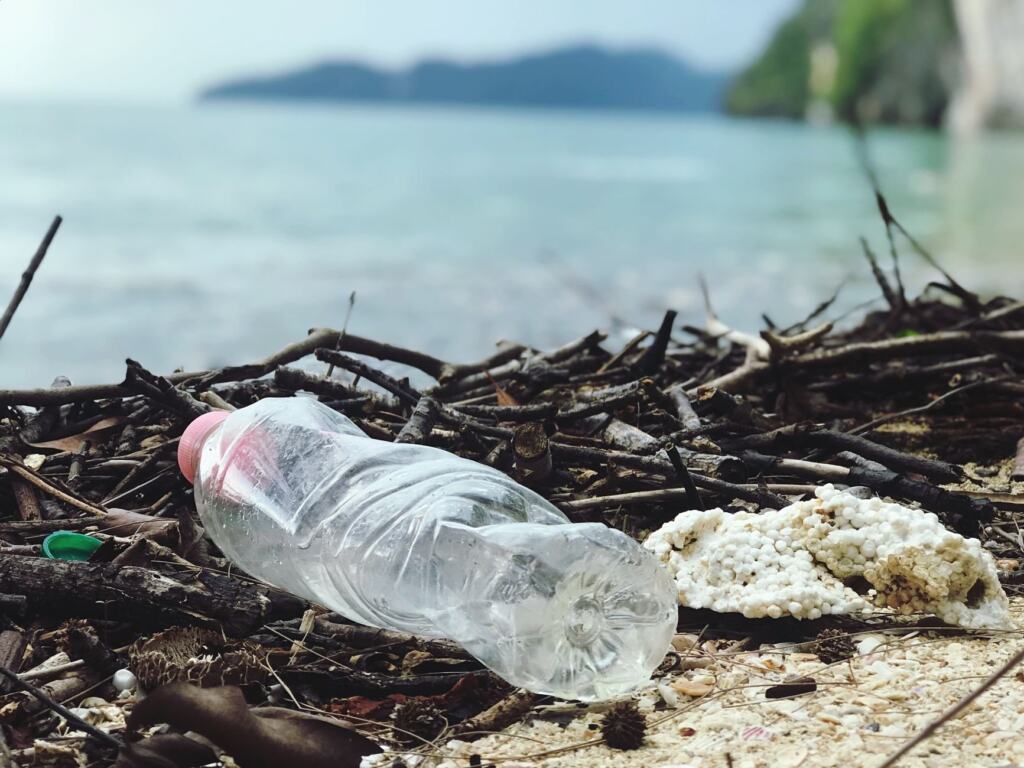
- Polyethylene: A conventional polymer that resists microbes and fragments physically. No biodegradation timeline applies to it.
- PET: The same logic applies to conventional PET. Its bio-based version, Bio-PET, is chemically identical to oil-based PET, so a plant-derived source does not make it biodegradable.
- PLA: A compostable polyester produced exclusively from bio-based sources such as corn starch. It is technically biodegradable, but only under specific composting conditions.
- Oxo-degradable plastic: Conventional plastic with an additive. It disintegrates but does not break down molecularly.
Timelines follow from conditions rather than from the polymer name alone. GoEcoPure notes that some biodegradable plastics break down within a few months in industrial composting facilities, while others take years in less ideal conditions. Industrial facilities reach 130°F or higher, with humidity and oxygen manually controlled, which is the environment compostable plastics are designed for.
Compostability standards compared
ASTM D6400, EN 13432 and ISO 17088 are the named benchmarks for a compostable designation. A plastic certified to these standards disintegrates within 12 weeks and biodegrades by at least 90% within 180 days in a composting facility, as described by Madison Group.
The condition is part of the standard: the result applies in a composting facility. A certificate does not promise the same outcome in a home compost heap, a landfill or open water. When you evaluate a product claim, check for a named standard and then check whether you have access to the facility type it assumes.
Landfills and open water
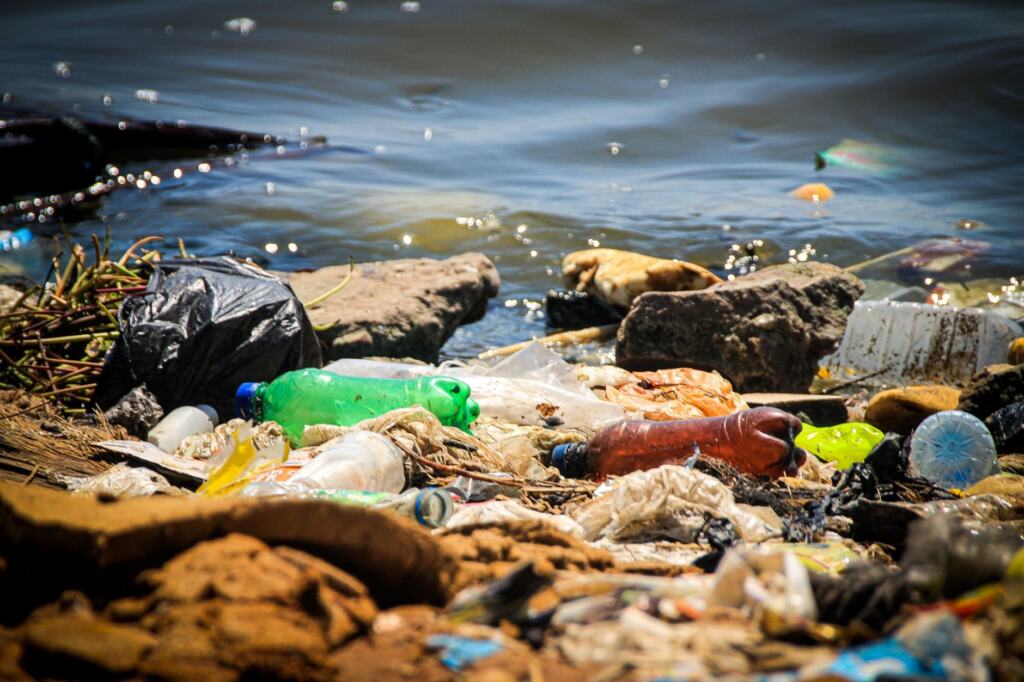
Bioplastics do not reliably biodegrade in landfills or the ocean. In a landfill, compostable plastics persist similarly to their non-biodegradable counterparts, because landfills are sealed and contain few microorganisms. PLA’s requirement for specific composting conditions means a discarded PLA item in the wrong environment is not following the tested pathway.
Bubble Paper adds that biodegradable plastics that degrade slowly or in the wrong environment can still leave behind microplastics. For litter-prone products such as cups and cutlery, that makes correct disposal more important than the material’s reputation.
Microplastics and what they mean for waste choices
Microplastics are the main consequence of misreading the label. Conventional plastic does not biodegrade; it fragments into smaller pieces, and the same is true of oxo-degradable plastics, which Madison Group says simply disintegrate into microplastics. Faster fragmentation is therefore not the same as breakdown, and an oxo-degradable claim should not count as a benefit.
Bubble Paper’s point on slow degradation matters here as well: even a biodegradable plastic can leave microplastics if it breaks down slowly or ends up in the wrong environment. The practical response is to reduce plastic that is likely to be littered, choose certified compostable items only where a facility accepts them, and keep conventional plastics in recycling streams.
Related sustainability topics
Waste choices sit alongside other sustainability decisions. For energy, see Green Hydrogen Energy: The Practical Guide To Production, Use, And Scale-Up In 2026 – Biolifetechnologies. For food, Vertical Farming at Home: A Practical 2026 Guide to Growing More Fresh Food in Less Space – Biolifetechnologies covers growing in limited space.
Frequently asked questions
Why do some composters refuse compostable plastics?
Madison Group reports that many commercial composters that accept food waste will not accept compostable plastics. Incomplete or slow composting is among the reasons it cites.
Is PLA made from fossil fuels?
No. PLA is a compostable polyester derived from renewable resources such as corn starch, and it is produced exclusively from bio-based sources. Its source does not change its need for industrial composting.
Why do biodegradable plastics cost more?
GoEcoPure states that biodegradable plastics are generally more expensive to produce than traditional plastics, reflecting higher material and production costs.